


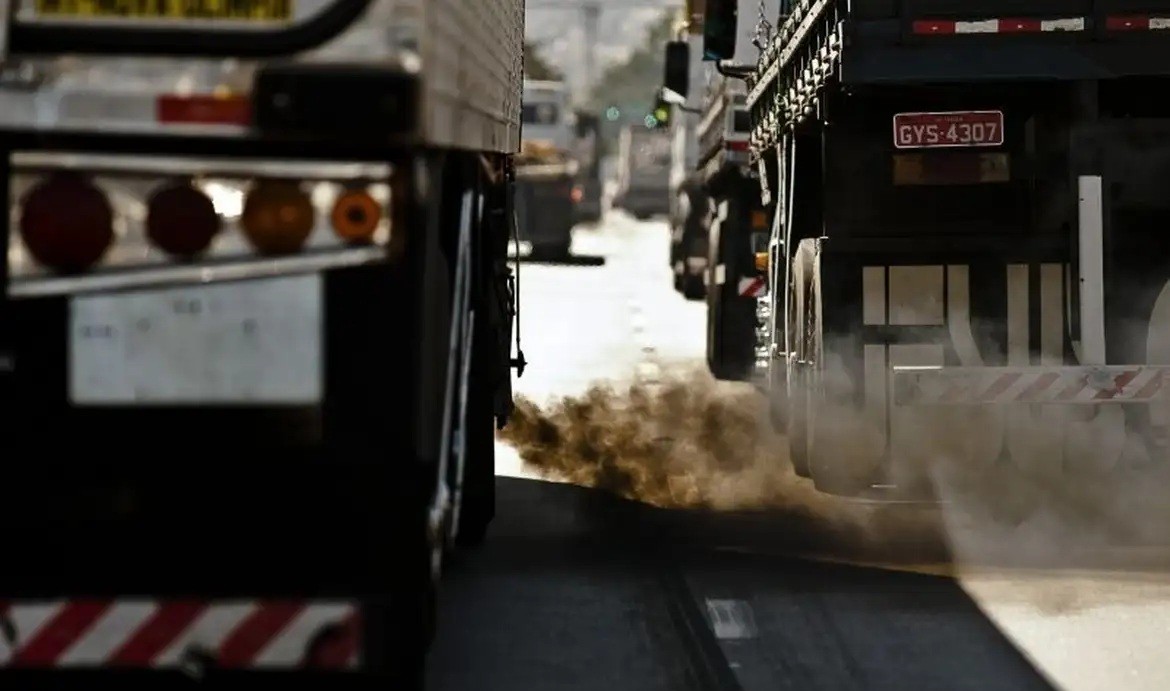
The researchers observed that exposure to fine particulate matter aggravated inflammation and intensified alveolar bone loss, one of the main characteristics of periodontitis, a disease associated with tooth loss in adults (image: Agência Brasil)
Published on 08/17/2026
By Maria Fernanda Ziegler | Agência FAPESP – Air pollution can affect oral health. A study conducted in Brazil by researchers from São Paulo State University (UNESP) and the University of São Paulo (USP) demonstrated for the first time that exposure to fine particulate matter (PM2.5), a main component of urban air pollution, causes changes in oral tissues and accelerates the destruction of periodontal tissues that support teeth.
The study was supported by FAPESP and the results were obtained by exposing mice to polluted air collected in the area around Doutor Arnaldo Avenue in western São Paulo city in a controlled environment.
“It’s already well documented that pollution affects various organs. Since the oral cavity is constantly exposed to the external environment, we suspected that it might also be affected by pollution. What we didn’t expect to observe were such significant changes in oral tissues,” says Luis Carlos Spolidorio, a professor at the UNESP School of Dentistry in Araraquara and coordinator of the study published in the journal Air Quality, Atmosphere & Health.
Graduate student Álvaro Formoso Pelegrin conducted the research under the supervision of Spolidorio, with the participation of Jhonatan de Souza Carvalho and Victor Yuji Yariwake.
The researchers observed that exposure to PM2.5 exacerbates inflammation in periodontal tissues and intensifies alveolar bone loss. This process compromises the structure that supports the teeth. Alveolar bone loss is a primary characteristic of periodontitis, an inflammatory disease that destroys the tissues supporting the teeth and causes tooth loss in adults.
The most surprising findings, however, were observed in the mucosa lining the tongue. “Even in animals without induced periodontal inflammation, we identified significant changes in the oral mucosa, including thickening of the tissue lining the tongue [epithelium], increased keratin deposition, and a higher number of degranulated mast cells. These results suggest that the oral mucosa may be particularly sensitive to the effects of air pollution,” says Spolidorio.
In addition to these structural changes, the study showed increased production of inflammatory markers (cytokines) and oxidative stress in the tongue and periodontal tissues. The latter are responsible for supporting and protecting the teeth. According to the researchers, this set of changes indicates that exposure to PM2.5 promotes a biological environment conducive to the development and intensification of inflammatory processes.
Oxidative stress, which is characterized by an imbalance between the production of reactive molecules and the body’s antioxidant defense capacity, can damage cells and tissues when this balance is disrupted. This mechanism has been identified as one of the main pathways through which air pollution can affect oral tissues and contribute to the progression of periodontal diseases.
“We’ve demonstrated in a controlled experimental setting that the oral mucosa undergoes changes when exposed to fine particulate matter. This finding represents an important advance since previous studies were limited to identifying correlations between air pollution and oral diseases. With our study, we were able to elucidate the cellular and molecular mechanisms linking exposure to the pollutant to the changes observed in the oral cavity,” the researcher explains.
According to Spolidorio, the effects of air pollution on oral tissues likely involve multiple biological mechanisms. This is because the oral cavity is one of the main interfaces between the body and the external environment. “Thus, inhaled particles can come into direct contact with the oral mucosa, triggering local inflammatory responses. Furthermore, after reaching the lungs, these particles can induce systemic inflammation and oxidative stress, which can affect distant organs and tissues, including the oral cavity,” he says.
According to the researcher, the results of the study reinforce the existence of a biological link between exposure to air pollution and changes in oral tissues. “Although further studies are needed to fully understand these mechanisms in humans, the data shows that oral health can also be influenced by the quality of the air we breathe,” he states.
The researchers emphasize that traditional oral healthcare remains essential. “While it’s impossible to eliminate the biological effects of air pollution exposure entirely, controlling the known risk factors for oral diseases is crucial. Proper brushing, regular flossing, a healthy diet, and periodic dental checkups remain essential measures for preserving oral health,” says Spolidorio.
According to the researcher, the results also underscore the importance of public policies aimed at improving air quality. “Preventing the effects of pollution depends as much on individual care as on collective health protection strategies. As we gain a better understanding of the impacts of air pollution on different organs and tissues, the importance of reducing the population’s exposure to air pollutants becomes increasingly evident,” he concludes.
The article “PM2.5 exposure induces oral tissue alterations and exacerbates experimental periodontitis via oxidative stress and mast cell activation” can be read at link.springer.com/article/10.1007/s11869-026-02014-4.
Source: https://agencia.fapesp.br/58997


