


The book describes the lives of these women, particularly their experiences with sexuality, pregnancy, childbirth, the postpartum period, breastfeeding, and raising or being separated from their children (photo: Daniel Antônio/Agência FAPESP)
Published on 09/07/2026
By José Tadeu Arantes | Agência FAPESP – As the capital of the empire and seat of the court, Rio de Janeiro was the largest slaveholding city in the world in the 19th century. In 1822, the year Brazil gained political independence, the city had approximately 110,000 inhabitants, about half of whom were enslaved. The African and Afro-descendant population, including enslaved, freed, and free people, constituted a large majority. Valongo Wharf alone received approximately one million Africans during the slave trade period, making it the largest port of arrival for enslaved people in the Americas.
In the 1840s, Rio was often described by foreign travelers as an “African city” due to the large number of Black and mixed-race people in the streets, markets, ports, and urban services. Before 1850, the abundance of the Atlantic slave trade kept the price of enslaved people low, allowing widespread access to captive labor. Middle-class white families could own one or two enslaved people, while wealthy families owned many more.
After the Atlantic slave trade officially ended in 1850, though not effectively, prices rose dramatically. This led to the concentration of slave ownership among the wealthiest sectors and the displacement of enslaved workers, including those from Bahia and the Northeast, to the coffee plantations of Rio and São Paulo. However, small-scale slaveholding, a characteristic of urban slavery, remained prevalent. Many white families lived off the money earned by so-called “money-earning slaves” and “hired-out slaves” on the streets. In these sectors, enslaved women played a predominant role. They were laundresses, cooks, snack vendors, food sellers, artisans, merchants, domestic workers, and wet nurses, among other roles.
The lives of these women, especially their experiences with sexuality, pregnancy, childbirth, the postpartum period, breastfeeding, and raising or being separated from their children, rarely appear directly in written sources from the 19th century. However, these topics were the subject of a study conducted by Lorena Féres da Silva Telles, a professor in the Department of History at the Federal University of São Paulo (UNIFESP) and a member of the Center for Research and Training on Race, Gender, and Racial Justice at the Brazilian Center for Analysis and Planning (Afro-CEBRAP).
The book resulting from this research was originally published in Portuguese under the title Teresa Benguela e Felipa Crioula Estavam Grávidas: Maternidade e Escravidão no Rio de Janeiro (1830–1888). It has now been translated into English and published by the University of Georgia Press under the title Teresa Benguela and Felipa Crioula Were Pregnant: Motherhood and Slavery in Nineteenth-Century Rio de Janeiro.
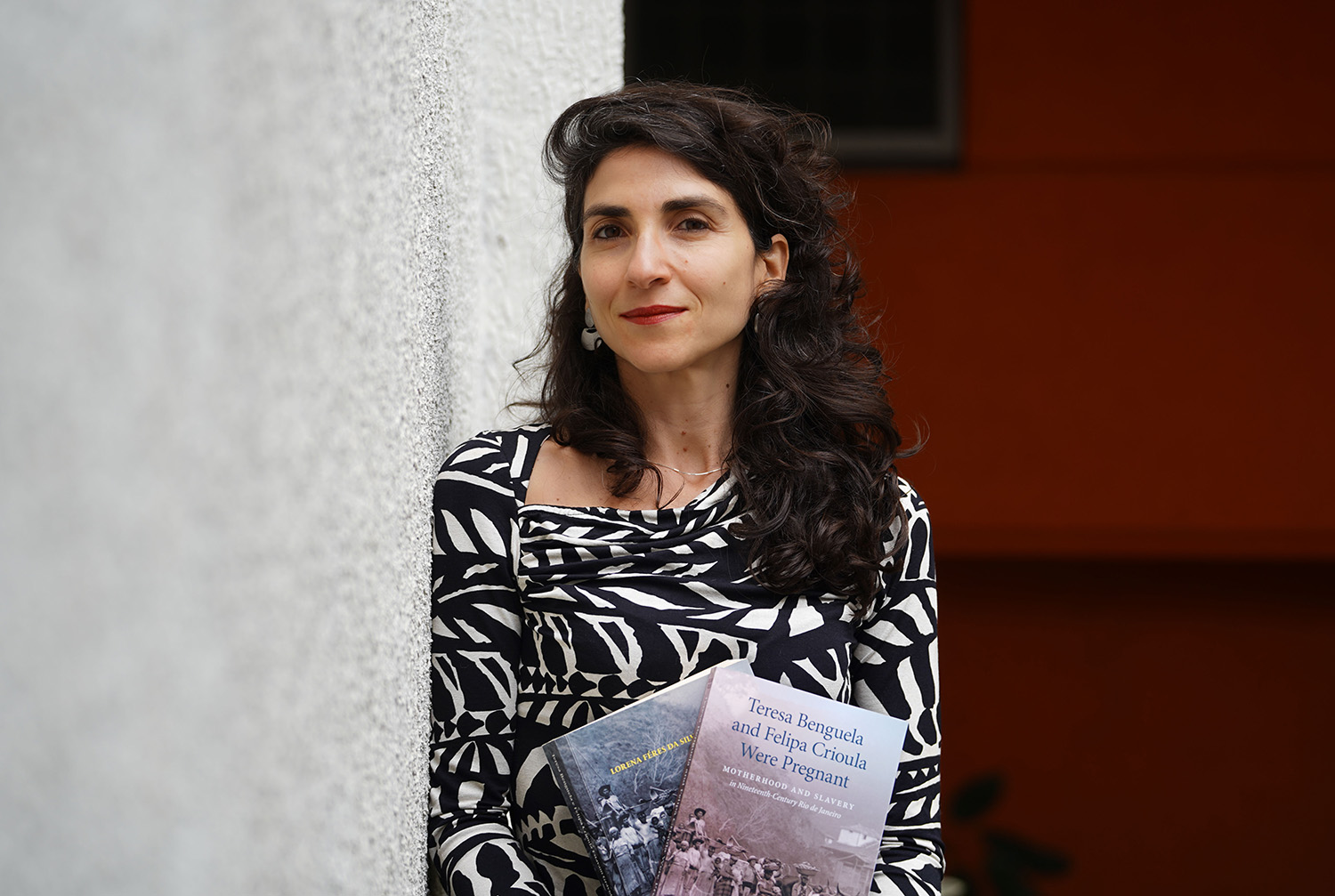
Lorena Féres da Silva Telles is a professor in the Department of History at UNIFESP (photo: Daniel Antônio/Agência FAPESP)
“This book is based on my doctoral dissertation, supervised by Maria Helena Machado in the Department of History at the University of São Paulo [USP], and my postdoctoral research, supervised by Robert Slenes in the Department of History at the State University of Campinas [UNICAMP], both funded by FAPESP. In addition, the translated book incorporates elements I obtained later during an internship at the University of Pittsburgh in the United States,” says Silva Telles.
The work that gave rise to the book was recognized as “the best thesis in Social History in the Department of History at USP” and was awarded prizes by the Latin American Studies Association (LASA) and the Brazilian Association of University Presses (ABEU).
“I researched a broad range of primary sources: advertisements for the purchase, sale, rental, exchange, and escape of enslaved women, whether pregnant or with children; baptismal records; criminal cases; clinical case reports; medical theses; paintings; and photographs. The goal was to give these women names and faces and to reconstruct aspects of their lives as much as possible, with motherhood as the central theme,” the historian explains. The research addressed topics such as sexual violence, abortion, the practices of Black midwives, medical care, infant mortality, and the impact of the slave system on family relationships.
“A single enslaved woman often had to perform multiple roles: cooking, doing laundry, carrying water, selling food and other goods on the streets, and working as a wet nurse. I sought to understand how different work routines affected pregnancy and motherhood. A nine-month-pregnant vegetable vendor had to walk the streets all day selling food; a maid, on the other hand, was confined to the domestic sphere and subject to the surveillance, whims, and mood swings of her masters. ‘Money-earning slaves,’ such as laundresses and greengrocers, often carried their babies strapped to their backs, which allowed them to breastfeed them when they were hungry. Wet nurses, on the other hand, who nursed the children of white women, were often unable to breastfeed their own children, who would die within their first year due to inadequate nutrition – fed only flour or banana porridge and animal milk,” Silva Telles describes.
Infant mortality was extremely high. It was often associated with the so-called “seven-day sickness,” a term used to describe neonatal tetanus. This condition results from an infection of the umbilical stump in newborns. Enslaved women were often forced to separate from their children when their masters rented them out. The children were sent to the “foundling wheel,” placed in the care of third parties, or, in the worst cases, abandoned in remote places.
The “foundling wheel,” also known as the “wheel of the abandoned,” was an institution for taking in abandoned newborns. It existed in various cities throughout the Catholic world, including colonial and imperial Brazil. The wheel was literally a rotating wooden wheel installed on the wall of religious or charitable institutions, usually the Santas Casas de Misericórdia. A person would place a baby in the outer opening, turn the wheel, and the child would be transported inside without the person leaving being identified.
The researcher emphasizes that enslaved women worked intensely until the end of their pregnancies and returned to work just a few days after giving birth. Often, they had only three days to a week of rest. However, for those who worked on the streets, being able to carry their babies on their backs was a source of joy. This custom was brought from Africa, as were the so-called “panos da costa,” which were used to carry children. These versatile fabrics could be used as shawls, turbans, or slings and constituted a strong marker of identity. They have been reclaimed in contemporary times by people of African descent as a symbol of racial pride.
Silva Telles notes that most of the women she studied were born in Africa. “In the first half of the 19th century, Rio de Janeiro received between 600,000 and 800,000 Africans. Men and boys predominated, but women and girls also arrived in large numbers. Most came from the Congo and Angola regions, arriving via the ports of Luanda, Benguela, Cabinda, and Ambriz. That population belonged to the Bantu language family and differed from the population brought to Bahia, which originated from Benin [formerly Dahomey] and Nigeria and belonged to the Yoruba language family. In addition to natives of the Congo and Angola, African men and women from Mozambique were also brought to Rio de Janeiro.”
The sea route from Mozambique was longer and more arduous because it required sailing along part of Africa’s eastern coast, rounding the Cape of Good Hope, entering the South Atlantic, and turning north toward the Brazilian coast. Until 1831, when the slave trade was still legal, enslaved Africans mainly disembarked at Valongo Wharf. After the slave trade was banned, clandestine landings began to take place in coastal regions such as Angra dos Reis and Paraty.
Most of the enslaved people brought from Mozambique belonged to the large Bantu linguistic group. This facilitated their integration with Africans from the central and west coasts. However, it is important to note that Bantu is not a single language, but rather a vast linguistic family spread across Central Africa, parts of East Africa, and Southern Africa. This family includes hundreds of related languages. Examples include Kimbundu, Kikongo, Umbundo, Macua, Changana, Swahili, Zulu, and Xhosa. There are numerous linguistic differences between the Bantu and Yoruba subgroups, involving not only vocabulary, but also grammatical structure and other aspects.
Religious traditions and the work of midwives
Candomblé is believed to have emerged in the city of Salvador or its environs between the late 18th and 19th centuries as a result of gradual processes of Afro-Atlantic religious reorganization. The first terreiros, or places of worship, were established under the leadership of princesses from Oió (in Nigeria) and Ketu (in Benin) who were brought to Brazil as enslaved people. The religious beliefs and practices of the Africans who arrived in Rio de Janeiro were similar to this Yoruba-based Candomblé but also had differences.
“Central African spiritual practices were strongly linked to the worship of the Inquices [spiritual entities in the Bantu worldview associated with forces of nature and deified ancestors],” Silva Telles explains. Similar to the Orixás in Yoruba-based traditions and the Voduns in Fon-Ewe-based traditions, the Inquices serve as intermediaries between humans and the Supreme God. In the Quicongo language, this deity is called Nzambi. He is considered the Heavenly Father and Sun God, and his female counterpart is Nzambici, the Heavenly Mother and Moon Goddess. All of these concepts underwent significant transformations within the framework of Christianity, both in colonial Africa and in the diaspora.
“Robert Slenes, my postdoctoral research advisor, speaks of the ‘fortune-misfortune complex’ that permeates this African spirituality. According to this concept, human existence oscillates between ‘fortune’ [balance, health, and fertility] and ‘misfortune’ [violence, enslavement, family separation, illness, and death]. Slenes highlights the social importance of priests and priestesses, who are seen as mediators between the natural and supernatural worlds,” the researcher explains.
In this context, illness was not just a physical problem, but rather an imbalance involving social relationships and spiritual forces. Ritual objects such as horns, figs, and amulets were seen as bearers of protective power against violence, misfortune, illness, and enslavement.
In light of this spiritual context, the work of midwives – a central subtheme of Silva Telles’s research – must be understood. These experienced women knew what the doctors of the time did not. They knew how to facilitate labor through physical maneuvers and massage. They knew how to turn a malpositioned fetus at the moment of birth. They knew how to protect the “soft spot” (anterior fontanelle) of the newborn. “Nineteenth-century doctors vehemently criticized the practices of African midwives, describing them as superstitious, barbaric, and depraved. However, it’s precisely through those criticisms that their knowledge can be reconstructed. Under the midwives’ guidance, many women gave birth while squatting, sitting in special chairs, walking, or leaning on other women – positions often condemned by the emerging field of academic medicine,” Silva Telles explains.
Prayers were combined with physical interventions. Relatives, friends, and other women from the community were called upon to help, creating a broad support network of women of African descent during childbirth. Men were kept at a distance. However, the child’s father’s pants were considered an auspicious object, one that should be kept nearby. In extreme cases, if everything went wrong, one could call a doctor. However, that did not usually help much.
“Medical schools first emerged in Brazil in 1832 in the country’s two main slave-holding cities: Rio de Janeiro and Salvador. Until then, childbirth was managed almost exclusively by women, including midwives, relatives, and neighbors. Medical students primarily learned obstetrics on the bodies of enslaved Black women admitted to the Santa Casa de Misericórdia. Those women became guinea pigs for the use of forceps, gynecological surgeries, and other obstetric interventions, which often resulted in infections and death,” the researcher emphasizes.
She mentions the case of one of the first recorded cesarean sections in Brazil, which was performed on an enslaved woman in the 1850s. The woman died of septicemia. In contrast, she cites the successful case of a cesarean section performed by an African priest in the Uganda region. Witnessed by the Scottish physician and missionary Robert William Felkin, this surgery became a celebrated case in the history of medicine thanks to the detailed account published in 1879. The case caught the attention of European doctors because, at a time when cesarean sections still had an extremely high mortality rate in European hospitals, both the mother and the baby survived.
According to Felkin, the laboring woman was given fermented banana wine for sedation while her abdomen was washed with the same substance, which likely served as an antiseptic as well. The surgery, performed by a priest-healer with the help of an organized team, involved making a midline incision in the abdomen, followed by opening the uterus. The baby was delivered with impressive speed. Next, the surgeon manually compressed the uterus, and the incisions were cauterized to control the bleeding. The operation concluded with suturing the abdominal wall using metal pins or thorns secured with plant fibers.
“In Brazil, a record of a birth assisted by a Black midwife on a coffee plantation shows that one postpartum practice used by African midwives and their descendants involved dissolving the ashes of nine embers taken from a household fire in water. That concoction was given to women who had just given birth to ensure a good recovery,” Silva Telles explains.
The number nine obviously had magical connotations. In some spiritual traditions, it is specifically associated with female-centered cults. However, it is also worth noting that ash is rich in minerals such as calcium, potassium, magnesium, and phosphorus. In addition to supplying the weakened woman with these elements, the concoction would have an antiseptic effect due to its high pH.
“Nineteenth-century medicine spread the idea that African women felt less pain during childbirth and possessed greater physical endurance. This narrative helped legitimize the exploitation of heavy labor and violent, invasive practices carried out on Black bodies, constituting an early form of obstetric racism. I specifically studied the case of a 17-year-old enslaved woman in labor who was repeatedly examined by medical students. According to the doctor who led the team, the baby changed position from all the palpation of the mother’s abdomen,” the researcher reports.
Sexuality, romantic relationships, and violence
For enslaved women, violence was always present, if not taking center stage. Most African and Afro-descendant women sought consensual relationships with partners of the same ethnic or linguistic background if they could. Stable unions and religious marriages were expected. However, violent episodes were constant. Slave owners frequently impregnated enslaved women and then sold them far away in an attempt to conceal the pregnancies and avoid family scandals. Rape was a structural component of the Brazilian slave system. “Newspaper ads advertised the sale of pregnant maids and even girls as young as 11 or 12 with infants in their arms, evidence of systematic sexual abuse,” says Silva Telles.
Maids were associated with the social prestige of slave-owning families. They were generally young women described in the ads as “beautiful,” “well-proportioned,” “demure,” and “talented.” According to the researcher, there is abundant evidence of the sexual exploitation of these women within slave-owning households.
Unlike certain regions of the southern United States, there is no consistent evidence of systematic policies of forced reproduction in Brazil based on non-consensual sexual intercourse between enslaved men and women. “Here, consensual relationships, concubinage, and religious marriages predominated. On the coffee plantations of São Paulo, which Robert Slenes has studied in depth, numerous marriages were consecrated by the Catholic Church. Many unions already existed informally and were later formalized. Those marriage records have become valuable historical documents for tracing families and kinship networks,” she says.
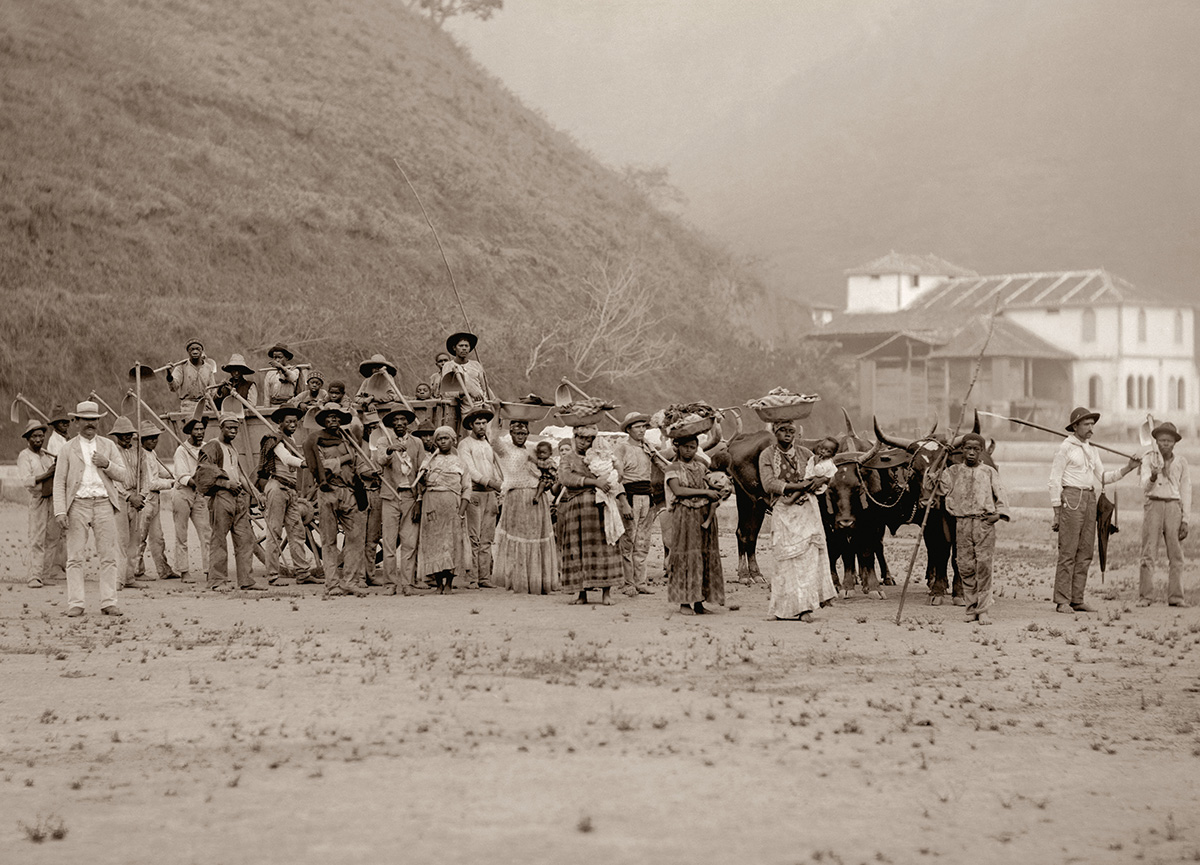
Setting out for the coffee harvest, 1885 (Marc Ferrez/Moreira Salles Institute Collection)
Baptismal records allowed the researcher to identify kinship ties and bonds of solidarity among Africans and people of African descent. Godmothers, godfathers, and other relatives formed essential networks of material, emotional, and spiritual support. In Rio de Janeiro, unmarried women often chose free people or African couples as godparents, strengthening community ties. Midwives often became godmothers to the children they helped deliver. Runaway notices also reveal networks of friendship among washerwomen, greengrocers, and close female friends who took in runaways and helped mothers in vulnerable situations.
Silva Telles emphasizes that the mother’s legal status determined the child’s status. Until September 28, 1871, children born to enslaved women were automatically born into slavery. The Lei do Ventre Livre (Free-Born Children Law), enacted during the reign of Dom Pedro II, granted freedom to children born on or after that date. In practice, however, these children remained under the guardianship of their masters until the age of eight, and the masters could choose to hand them over to the state in exchange for compensation or keep them working until the age of 21.
According to the researcher, the Free-Born Children Law had particularly perverse consequences in urban areas. Since slave owners profited greatly from hiring out wet nurses, many began forcing enslaved women to abandon their children. These children were born free and no longer represented future assets. The result was a significant increase in the abandonment of newborns and infant mortality. On coffee plantations, however, the price of enslaved people had increased so much due to the domestic slave trade that plantation owners continued to exploit the labor of the so-called “ingênuos” – that is, the children of enslaved women born after 1871.
The domestic slave trade became the primary source of labor for prosperous coffee plantations in Rio de Janeiro and São Paulo. Following the official end of the Atlantic slave trade, men and women were sold from regions such as Bahia, Pernambuco, Maranhão, and Rio Grande do Sul to coffee plantations in the southeast. In Rio de Janeiro, the number of enslaved women decreased significantly between the mid-19th century and the 1870s. During this period, the number of free women, poor women, and Portuguese immigrants employed in domestic service increased.
The study aimed to reconstruct the life stories of “ordinary women,” revealing their names and experiences. With this focus, the study brought people such as Teresa Benguela, Rosária Cassange, Felipa Crioula, Marcelina, Geralda, and Ângela Maria out of anonymity. “Some fled while pregnant or with young children. Others suffered extreme violence, family separation, and torture. There are also dramatic cases of infanticide and attempted suicide in contexts of absolute despair. My goal was to link individual history with structural context, restoring historical agency to these women,” the researcher argues.
Brazil’s role in the colonial slave trade
Brazil was the primary destination of the Atlantic slave trade. Between the 16th and 19th centuries, approximately 40% of all Africans deported to the Americas ended up in Brazil. It is estimated that a total of 12.5 million Africans were shipped across the Atlantic, of whom 10.7 million survived the crossing. The most widely accepted figures today, based primarily on the Slave Voyages project database, show the following distribution of enslaved Africans, in descending order: Brazil (approximately 5 million), the Caribbean (4.5 to 5 million), Spanish America (1.5 to 2 million), and the United States (400,000 to 500,000). The term “Caribbean” encompasses many islands, including Jamaica, Haiti, Santo Domingo, Cuba, Barbados, Martinique, Guadeloupe, and Curaçao, among others.
The relatively small number of people brought to the United States does not mean that the enslaved population there was small. In fact, it grew enormously through internal reproduction and reached nearly 4 million by 1860.
By contrast, Brazil experienced a significant decline in its enslaved population due to the end of the Atlantic slave trade, an extremely high mortality rate, and the gradual decline of the slave system in coffee cultivation. This decline was driven by escapes, the formation of quilombo communities, the granting or purchase of manumissions, emancipation laws, and the introduction of wage labor or mixed modes of production (slave labor, sharecropping, and wage labor). In 1872, at the time of the first national census, Brazil still had approximately 1.5 million enslaved people. By 1888, the year of the formal abolition of slavery through the Lei Áurea, or “Golden Law,” signed by Princess Isabel on May 13, that number had fallen to approximately 723,000.
It should be noted that wage labor did not lead to the social inclusion of formerly enslaved people. Much of the Black population was excluded from access to land, credit, and the most desirable jobs. Beyond the economic aspect, the European immigration policy implemented by national elites was often conceived as a project to “whiten” the Brazilian population.
The study is situated within an international debate on gender, motherhood, and slavery in the Americas. Engaging with research from the United States, the French Caribbean, Jamaica, and Cuba, it seeks to situate Brazilian urban slavery within a broader Atlantic context. The University of Georgia Press’s publication of the English translation is linked precisely to this international dialogue.
The book Teresa Benguela and Felipa Crioula Were Pregnant: Motherhood and Slavery in Nineteenth-Century Rio de Janeiro can be purchased at www.ugapress.org/9780820375687/teresa-benguela-and-felipa-crioula-were-pregnant/.
Source: https://agencia.fapesp.br/59142


