



The study was conducted with 4,200 adolescents (image: Pexels).
Published on 10/06/2026
By Luciana Constantino | Agência FAPESP– A new study of 4,200 adolescents revealed that cyberbullying rarely occurs in isolation; it almost always functions as an extension of physical and verbal aggression already present in the school environment. The study, conducted at the Federal University of São Paulo (Unifesp) in Brazil, mapped students’ involvement profiles and found that the lines between victims and perpetrators often blur in a cycle of violence spanning both the physical and digital worlds.
The study raises a concerning warning beyond mapping instances of aggression: young people trapped in this network of multiple bullying contexts show a strong association with psychological distress and the use of substances such as alcohol and cigarettes. The data were published in the journal Psychiatry Research.
Students from seventh grade of elementary school through third grade of high school participated in the study. Through statistical analyses, the study identified three profiles of adolescents. The majority of them (48%) make up a group that shows no significant association with any type of violence. The next group, representing 46% of the sample, consists of young people who are frequently bullied at school and sometimes engage in bullying but rarely in cyberbullying. The final group, representing 6% of the sample, is the most complex: the so-called “victim-perpetrators” who experience and perpetrate acts of aggression in multiple contexts and frequently move between physical and online environments.
Though it is the smallest group, the third group is the most vulnerable. More than half (52.4%) of young people classified as victim-perpetrators in multiple contexts exhibit psychological symptoms at a clinically significant level, compared to 12.5% of those not involved in bullying – an 11-fold higher likelihood. They are also more likely to use alcohol, tobacco, and other drugs: seven out of ten have consumed alcohol at some point in their lives, and cigarette use is nearly three times more frequent than among their peers who are not involved in bullying incidents.
“The research shows that violence against the same young person occurs both at school and online, indicating that cyberbullying is often an extension of in-person conflict. We have to look very closely at these young people involved in multiple contexts. It isn’t just bullying. It includes mental health issues and the use of alcohol and other drugs. There’s no way to separate them. This study reinforces the evidence that in Brazil, it isn’t possible to have one program focused solely on mental health, another on drug prevention, and a third against bullying, as is often seen in schools. Everything is connected,” says Professor Zila Sanchez, head of the Department of Preventive Medicine at UNIFESP and coordinator of the study.
The study emphasizes the need for school programs that integrate violence prevention, mental healthcare, and efforts to combat alcohol and drug use.
How to identify
Sanchez explains that typical adolescent behavioral changes tend to be temporary. However, a red flag arises when isolation, aggression, irritability, or disruptive behavior become frequent and interfere with a young person’s studies, social interactions, or other areas of their life.
According to the professor, behavior is classified as bullying when it is recurring and not limited to physical aggression. It can involve social exclusion, humiliation, hiding belongings, making comments about physical appearance, and other types of insults. “Physical violence actually accounts for a minority of cases, and the school intervenes to curb it. But we need to take a broader view of bullying. Cases range from frequently excluding a student from games or conversations to the point where they would rather stay in the classroom during recess to insults about their appearance, weight, and other characteristics. That often goes undiagnosed by the school,” she tells Agência FAPESP.
Since 2024, bullying and cyberbullying have been considered crimes under Brazilian law (Law No. 14.811), classified as “systematic intimidation” and “systematic virtual intimidation,” respectively, involving intentional and repetitive physical or psychological violence. In cases of conviction, penalties range from a fine to imprisonment for up to four years.
The 20th Brazilian Yearbook of Public Safety, produced by the Brazilian Forum on Public Safety (FBSP), reports that there were 4,549 police reports of bullying against children and adolescents in Brazil in 2025, which is a 68.2% increase compared to the previous year. Additionally, there were 677 reports of cyberbullying, marking a 61.4% increase during the same period. Experts point out that these figures tend to reflect the most serious cases – those that extend beyond the school setting – and that the sharp rise is a result of the implementation of the new law, not merely an increase in violence.
However, the National School Health Survey (PeNSE 2024), conducted by the Brazilian Institute of Geography and Statistics (IBGE), reveals an upward trend in the percentage of students reporting being bullied – rising from 23% in 2019 to 27% in 2024. Consequently, four out of ten students aged 13 to 17 report having been victims of bullying at school.
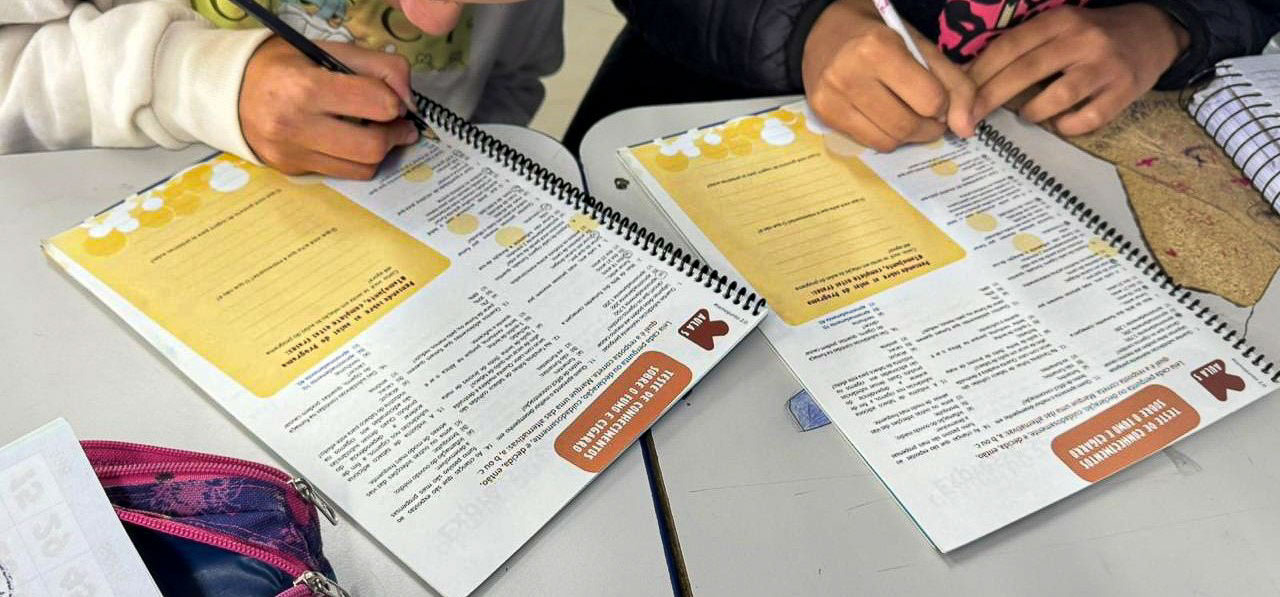 Some of the findings of the study contributed to the creation of Prisma, a program launched in 2026 in the state of São Paulo aimed at eighth- and ninth-grade elementary students. Prisma is being tested in 36 state schools across six cities, with nearly 5,000 adolescents participating (image: UNIFESP)
Observed profile
One of the unique aspects of the study was its effort to identify patterns of adolescent behavior by analyzing their associations with psychological symptoms, drug use, and sociodemographic factors. In addition to administering an online questionnaire, the researchers conducted statistical analyses to identify probabilistic clusters that explain how different forms of violence tend to occur together in the sample (latent classes). Typically, studies of this type use an approach focused on isolated categories, such as online or physical aggression alone, and separate data sets.
The gender-specific results reveal that girls are more likely to be victims of bullying, while boys predominate in the group involved in multiple contexts. Younger adolescents and Black and Brown students are more likely to be in the highest-risk group. According to the researchers, this finding reinforces the importance of considering social and racial inequalities in prevention strategies.
One notable finding was that screen time was not a distinguishing factor between the groups, even though most students spend four hours or more online each day.
“We were unable to distinguish, based on the number of hours, any differences in impact between those exposed to cyberbullying and those not exposed to any type of violence. It has much more to do with the group they interact with on WhatsApp, for example, which is generally the same as their school group. Parents often think that keeping their children away from screens protects them. Protection isn’t just about limiting screen time; it’s also about what teenagers are doing, who they’re interacting with, and what’s happening,” says Sanchez.
When discussing the role of parents, the professor cited another study published by her group. Based on data from the same sample, the study revealed that parental attitudes are one of the most significant factors in preventing alcohol and drug use among young people. The data indicate that the way parents raise their children can significantly reduce the risk of substance use, even in families where caregivers use substances such as cigarettes, vapes (which are illegal in Brazil), and marijuana. This reduction becomes even more significant when the relationship between generations is characterized by bonding, presence, dialogue, and clear rules (read more at https://agencia.fapesp.br/57195).
Sanchez’s research is part of Prev.Action, a Thematic Project funded by FAPESP that evaluates strategies for preventing alcohol use among adolescents in four municipalities in the interior of the state of São Paulo: Cordeirópolis, Iracemápolis, Salesópolis, and Biritiba-Mirim. FAPESP supported the most recent work by awarding a doctoral scholarship to biomedical researcher Augusto Henrique Roiz Druziani, the first author of the article, and a postdoctoral fellowship to Luís Eduardo Soares dos Santos.
From science to public policy
By analyzing programs aimed at preventing bullying, mental health issues, and substance use among young people, the researchers identified gaps in public policy regarding the integration of schools, families, and health services.
Some of these findings contributed to the development of Prisma, a program launched in the state of São Paulo in 2026. Prisma is aimed at eighth- and ninth-grade elementary school students with the goal of preventing alcohol and other drug use, as well as reducing violence in the school environment.
Prisma is currently being tested in 36 state schools across six cities, with nearly 5,000 adolescents participating. Teachers receive training, materials, educational resources, and support during implementation. Meanwhile, the students receive 12 lessons on preventing drug use, bullying, and cyberbullying, as well as emotional education. Initial results are expected following the end-of-year follow-up.
“The seed is being planted with this FAPESP-funded study so that we can develop a program in partnership with the state. The research made it possible to test a public policy in the field. The study identified gaps, guided the refinement of interventions, and translated its findings into school-based practice,” says Sanchez, who is also coordinating the program.
The article “Patterns of involvement in bullying and cyberbullying among adolescents: A latent class analysis” can be found at https://sciencedirect.com/science/article/pii/S0165178126003987.
Source: https://agencia.fapesp.br/59344


