


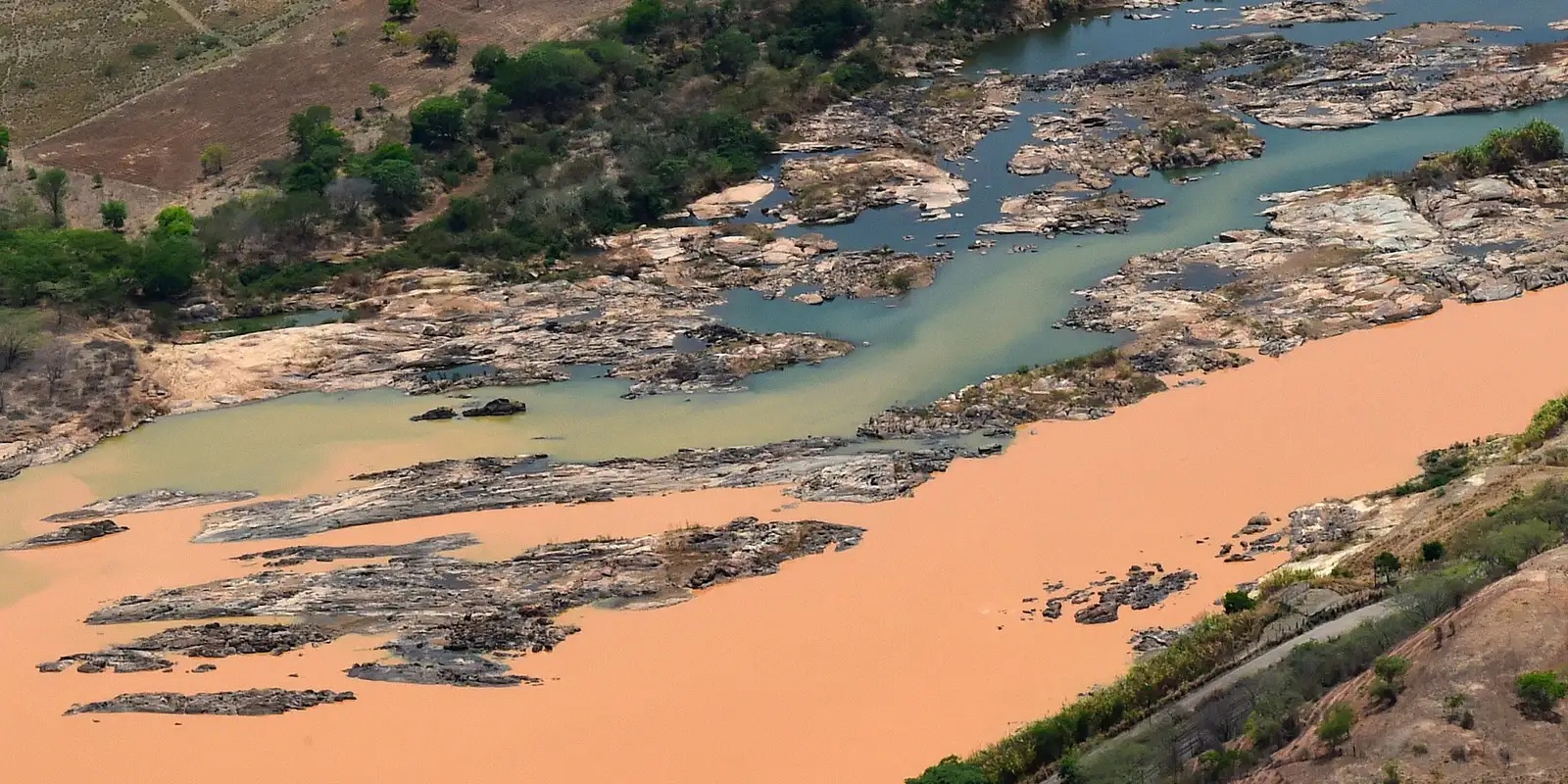
The toxic sludge released when the dam burst caused contaminants present in the riverbed – accumulated there over centuries of mineral exploitation – to remain in suspension. This cross-contamination transformed the waters of the Doce River into a “pollutant bomb,” in the words of the author of the study (photo: Fred Loureiro/SECOM-ES)
Published on 12/15/2025
By Maria Fernanda Ziegler | Agência FAPESP – Four years after the Fundão dam collapse – the world’s largest mining disaster, which occurred in 2015 in the city of Mariana in the state of Minas Gerais, Brazil – a study found that fish in the Doce River were still highly contaminated by metals and other toxic substances. After analyzing 503 fish, including lambaris (Astyanax spp.), cascudos (Locariidae), jundiás (Zungaro spp.), and mandis (Pimelodus maculatus), the researchers concluded that consumption of these fish was inadvisable in 2019 due to the associated health risks. The results were published in the journal Total Environment Advances.
In the study, which was supported by FAPESP, Brazilian researchers affiliated with São Paulo State University (UNESP) and the Federal University of Paraná (UFPR) showed that contamination in the Doce River basin persisted with an accumulation of 13 metals, including aluminum, barium, cadmium, cobalt, chromium, iron, lithium, manganese, nickel, lead, and zinc.
Cadmium, chromium, and lead exceeded legal limits and posed health risks. The first two are carcinogenic, and lead can cause memory impairment and a lower IQ. Iron and manganese were the most prevalent metals detected in the fish.
“The dam burst in 2015, and although studies showed a reduction in contamination in the Doce River the following year, the fish still had high levels of metals and other toxic substances five years after the disaster,” says Flávia Yamamoto, a visiting professor at the Federal University of Ceará (UFC) and author of the study. She argues that independent studies of this type should be conducted more regularly.
The collapse of the Fundão dam, which is owned by the mining company Samarco – controlled by the Brazilian company Vale and the Anglo-Australian company BHP – killed 19 people and left more than 600 people homeless. The mud containing tailings from iron ore extraction (about 34 million cubic meters) reached the Doce River, whose watershed covers 230 municipalities in the states of Minas Gerais and Espírito Santo, impacting the sea as well.
Double effect
The study of fish contamination in the Doce River basin is considered one of the most comprehensive because of the large number of fish analyzed and the samples collected from different sections of the river during the rainy (summer) and winter seasons.
Yamamoto explains that, in addition to introducing new pollutants, the mud released when the dam burst suspended contaminants that had previously been deposited on the riverbed. “This dynamic, intensified during the rainy season, transforms the river into a pollutant bomb, perpetuating the contamination of the food chain,” says the researcher.
She says that the region of the Upper Doce River, located in the iron quadrangle of Minas Gerais, has a history of mineral exploitation that began more than 300 years ago with gold mining. This activity introduced high levels of toxic metals, such as arsenic and mercury, into the environment even before the Fundão dam collapsed. The area continues to be exploited for iron and manganese extraction today, contributing to a complex mixture of contaminants.
In addition to mining, the river basin is home to the largest steel complex in Latin America, known as Vale do Aço. It receives industrial effluents and untreated domestic sewage from several cities, including Governador Valadares. Intensive agriculture also contributes to the pollutant load in the river.
Chronic effects of contamination
“The main environmental problem in the Doce River basin is related to the chronic effects of contamination. This involves prolonged exposure to pollutants over time. These cumulative impacts tend to manifest in concentrations that may initially appear harmless. However, few studies address this long-term perspective,” says Yamamoto.
The research evaluated the bioaccumulation of these contaminants in fish and performed chemical analyses of the water and sediments. A risk assessment was also conducted to estimate the potential human health effects resulting from consuming these fish, including carcinogenic and non-carcinogenic risks. The study was conducted in collaboration with Larissa Ajala Batista, a researcher from the Federal University of Paraná.
“Despite all the independent studies conducted on the Doce River, it’s still unclear whether the goal of the basin’s recovery will be to return to pre-disaster contamination levels, which were already high, or to seek truly safe standards for health and the environment,” says Denis Abessa, a professor at UNESP and supervisor of Yamamoto’s postdoctoral study.
Abessa points out that the situation is especially critical for populations that depend on fish as their main source of food and income. “Who eats the most fish? The riverside and traditional populations that live off fishing. And the recommendation not to consume fish puts these communities in a very cruel dilemma: risk their long-term health or face hunger and food insecurity,” he says.
In this scenario, the researchers emphasize the need for continuous action by authorities and environmental managers. “It’s important that environmental agencies conduct and disclose regular monitoring of contamination in the fish, not least because the population doesn’t know whether it can trust the company’s information and monitoring. It’s also extremely important that the results of these independent studies be communicated to the affected population to allow people to make informed decisions,” emphasizes Yamamoto, who has worked to communicate with researchers and community leaders in the affected region in addition to her research.
The article “A pretty kettle of fish: Contamination of fish from the Doce River basin after the world’s largest mining disaster and associated human health risks” can be read at www.sciencedirect.com/science/article/abs/pii/S2950395725000177?via%3Dihub.
Source: https://agencia.fapesp.br/56826


