


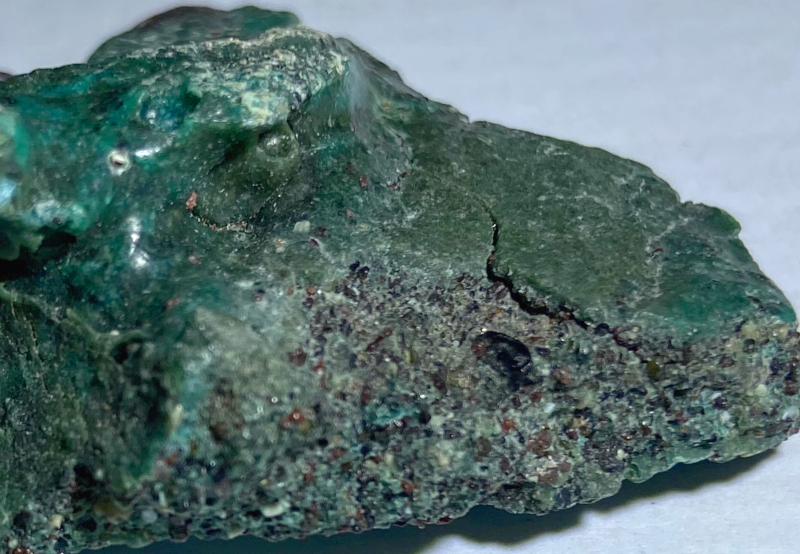
Plastic rock found on Trindade Island. It is formed by sediments and remains of marine ropes. The sea erodes it and spreads microplastics to other beaches on the island (photo: Fernanda Avelar Santos)
Published on 02/23/2026
By André Julião | Agência FAPESP – Even the most remote regions of the globe are not free from plastic pollution. In a study published in Marine Pollution Bulletin, researchers from São Paulo State University (UNESP) in Brazil detected plastic rocks on Trindade Island, the easternmost point of South America. They also found that green turtle (Chelonia mydas) nests are particularly conducive to plastic accumulation and burial. This increases the likelihood that plastic will remain in the geological record and also compromises the conservation of the species.
Plastic rocks are agglomerations of plastic and natural sediments, mainly resulting from human actions, such as bonfires, over litter on beaches. In Brazil, plastic rocks were first detected at Parcel das Tartarugas, one of the beaches on Trindade Island, which is located 1,100 kilometers off the coast of the state of Espírito Santo (read more at revistapesquisa.fapesp.br/en/plastic-rocks/).
After monitoring plastic pollution on the island for five years, the authors demonstrated that the plastic rocks discovered in 2019 are eroding and have already lost approximately 40% of their original size, spreading fragments to six additional beaches on the island. Most of the macro- and microplastics accumulate in the depressions where turtles bury their eggs annually.
“One of the requirements for the Anthropocene to be considered a new geological epoch, something still under debate, is precisely the existence of human-made materials buried in the sediment. As they were up to 10 centimeters below the surface in the nests, this is a potential accumulation point for the next million years,” explains Fernanda Avelar Santos, the first author of the study. She conducted the study during her postdoctoral research with a scholarship from FAPESP at the Faculty of Science and Technology (FCT) of UNESP’s Presidente Prudente campus.
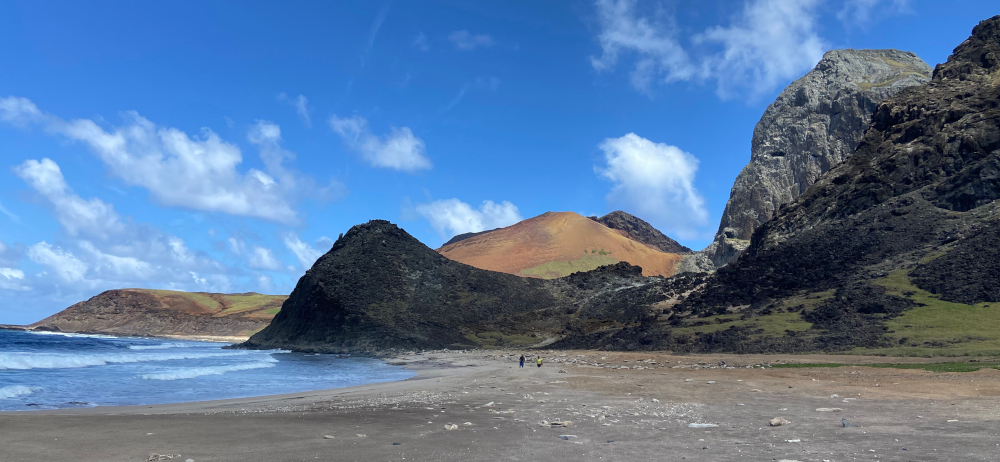
Places where green turtles lay their eggs are especially sensitive to plastic accumulation and sedimentation (photo: Fernanda Avelar Santos)
The work is part of a project supported by the Foundation.
Using spectroscopy equipment, the researchers analyzed the plastics found on the island to identify the polymers and additives present in the samples. “Chemical tests identified that these were high-density polyethylene [HDPE] ropes and dyes containing copper, a metal that gives them their green color. This raises a red flag regarding maritime activities such as fishing and shipping, which are responsible for this source of marine pollution, the largest in the world,” says Santos, who is currently completing an internship at Western University in Canada with a FAPESP scholarship.
The debris was also classified by shape to indicate transport mechanisms and the time and distance over which it moved. More rounded shapes are associated with areas close to the sea since the waves constantly reshape the material.
More angular shapes, on the other hand, are associated with burial in turtle nests – the material remains more or less static in the sediment and suffers less from the action of the sea. “This indicates that plastic is part of the geological cycle of the beach, with characteristics very similar to grains of sand and rock fragments,” the researcher explains.
Waste management
Trindade Island is a volcanic formation rich in biodiversity. There is no permanent human population, only a rotating team of 30 to 40 Navy members. It is part of the National Monument of the Islands of Trindade and Martim Vaz and Mount Columbia, which is classified as an integral conservation unit.
The presence of plastic waste, including plastic rocks, is quite symptomatic of this type of pollution, which affects even the most isolated spots on the globe, seemingly far from human activities.
“Apart from the visible impact on the environment, we can assume that this plastic is being ingested by wildlife – not only turtles, but also fish, birds, and crabs. It’s a unique area in the world, and this is an important warning,” says the researcher (read more at agencia.fapesp.br/50636).
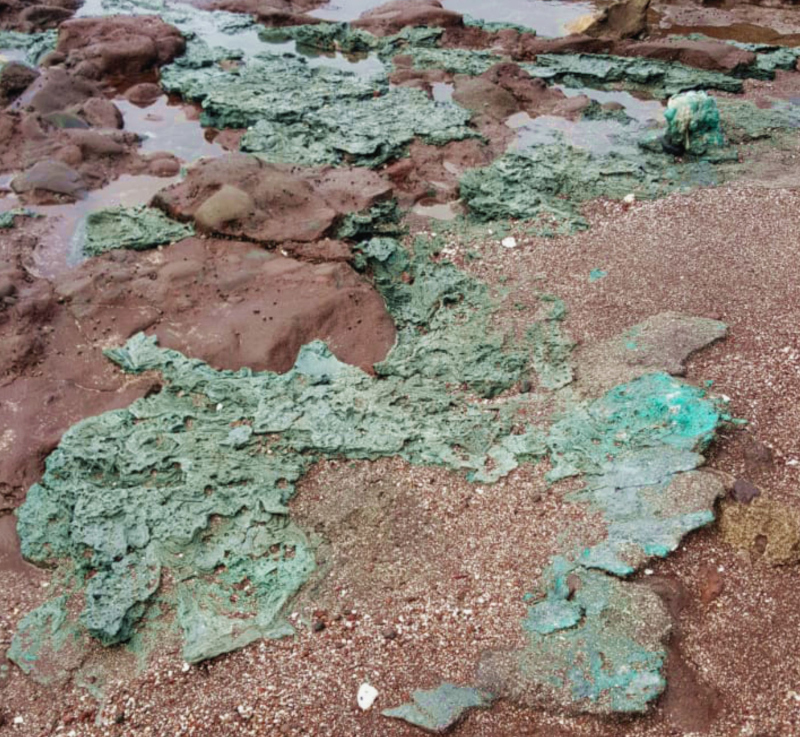
A rocky outcrop has incorporated plastic and is part of the landscape of one of the most isolated spots in Brazil (photo: Fernanda Avelar Santos)
The researchers say that the results reinforce the need for public policies to manage plastic waste, especially marine ropes, as well as coordinated actions to clean up beaches. Priority should be given to beaches that are home to wildlife directly affected by pollution, such as Parcel das Tartarugas.
The article “Anthropogenic stones on a remote oceanic island: formation, transport, and burial in a sea turtle nesting beach” can be read at sciencedirect.com/science/article/abs/pii/S0025326X25015772.
Source: https://agencia.fapesp.br/57265


