


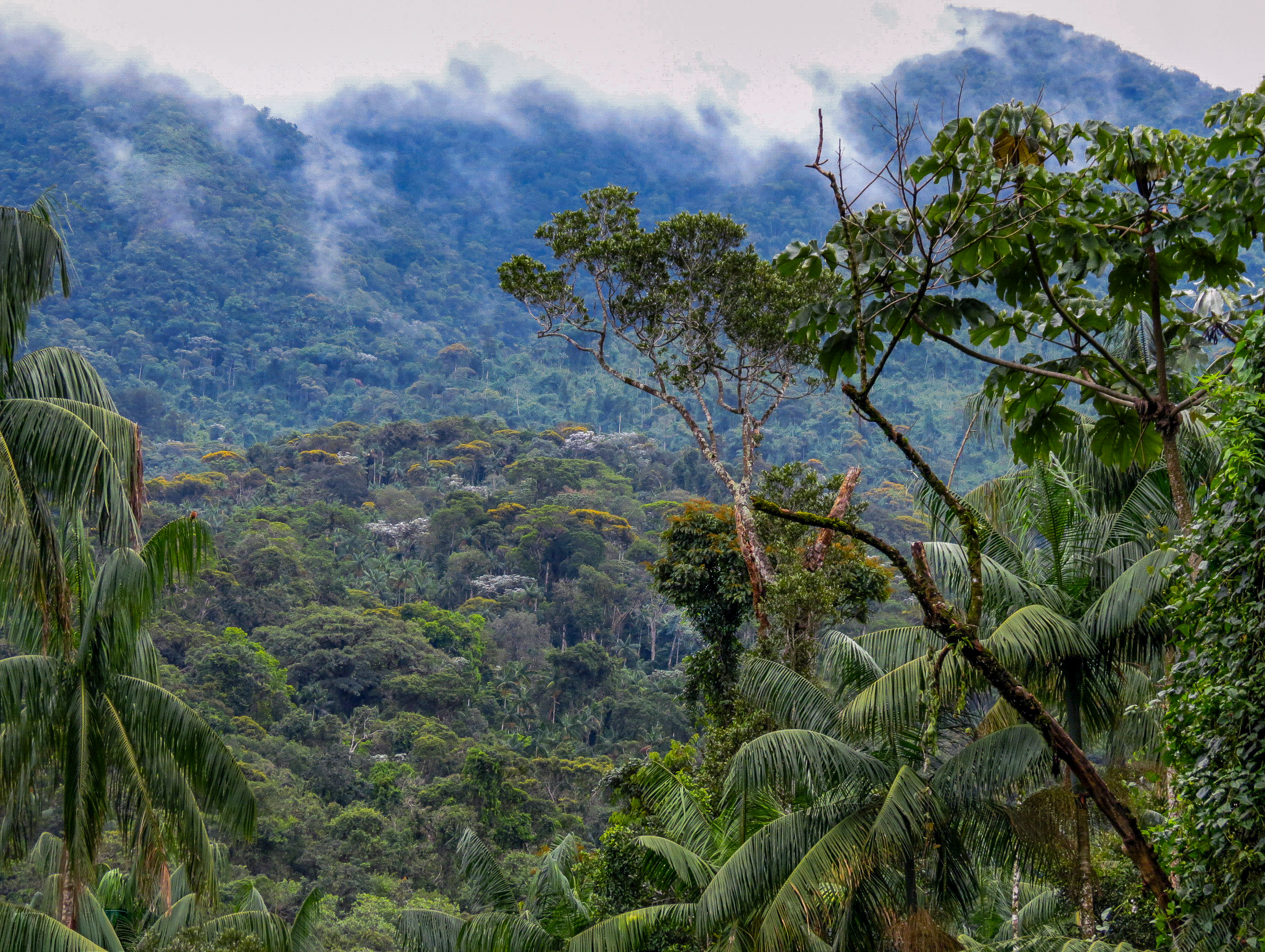
Itatiaia National Park in Rio de Janeiro. There are few areas of continuous Atlantic Forest like this conservation unit (photo: William Zaca)
Published on 08/03/2026
By André Julião | Agência FAPESP – Seed dispersal through wind, water or animals is a crucial process for forest renewal and biodiversity preservation. In the case of the Atlantic Forest, a new study showed that the amount of forest on the landscape surrounding an area and the amount of rain are the main factors responsible for ensuring richness and diversity of seeds. In practical terms, the research revealed that a small patch of forest with other adjacent green areas is more capable of regenerating itself than a huge but isolated fragment amidst a deforested landscape.
The scientists analyzed this process of dispersal – known as “seed fall” – in 52 Atlantic Forest fragments distributed throughout the entire biome, from the Northeast to the South of Brazil. The results were published in the Journal of Ecology.
The fragments ranged from small areas of about four hectares to much larger ones covering thousands of contiguous hectares. The number of seed species – that is, species richness – increased as forest cover and precipitation increased, regardless of the size of the fragments.
“Forest cover proved to be a key metric for assessing landscape composition, or the amount of habitat. It’s the factor that most influences the parameters of seed fall in tropical forests,” explains Luís Felipe Daibes, the first author of the study. Daibes conducted the research as part of a postdoctoral fellowship funded by FAPESP at the Institute of Biosciences of São Paulo State University (IB-UNESP) in Rio Claro.
According to Daibes, understanding seed fall patterns across the landscape allows for more effective conservation strategy targeting, prioritizing more connected ecosystems.
Additionally, the results improve the ability to predict how species communities might function under scenarios such as biodiversity loss and climate change.
Remaining areas
Currently, only 23% to 24% of the original Atlantic Forest remains, mostly in small, isolated fragments. The study demonstrated that these fragments contribute more to biodiversity as the surrounding forest cover and precipitation increase, rather than as the size of the fragment increases.
“The interesting thing is that highly fragmented areas can actually produce a greater quantity of seeds. However, these landscapes tend to be dominated by a few generalist species with many small seeds,” says Daibes, who completed an internship at Virginia Tech in the United States for this study and is currently a researcher at the Rio de Janeiro Botanical Garden.
The study also received support from FAPESP through a Thematic Project. The foundation awarded a series of grants beginning in the 2000s that enabled the research that generated the data used in the study.
Information was drawn from academic studies conducted between 1987 and 2021 at various locations within the biome. These studies were a collaborative effort involving more than 60 authors from different institutions.
The study compiled and analyzed a database of 1,905 seed traps in 52 Atlantic Forest fragments. In total, 1.3 million seeds were sampled, and 1,029 taxa were identified at least to the level of their botanical family.
Seed traps are collectors that resemble sieves or mesh nets. They are suspended from the forest floor or tied to branches and have diameters ranging from 20 centimeters to one meter. These traps accumulate leaves, fruits, and seeds. They make it possible to assess the quantity and diversity of seed species dispersed in a given location.
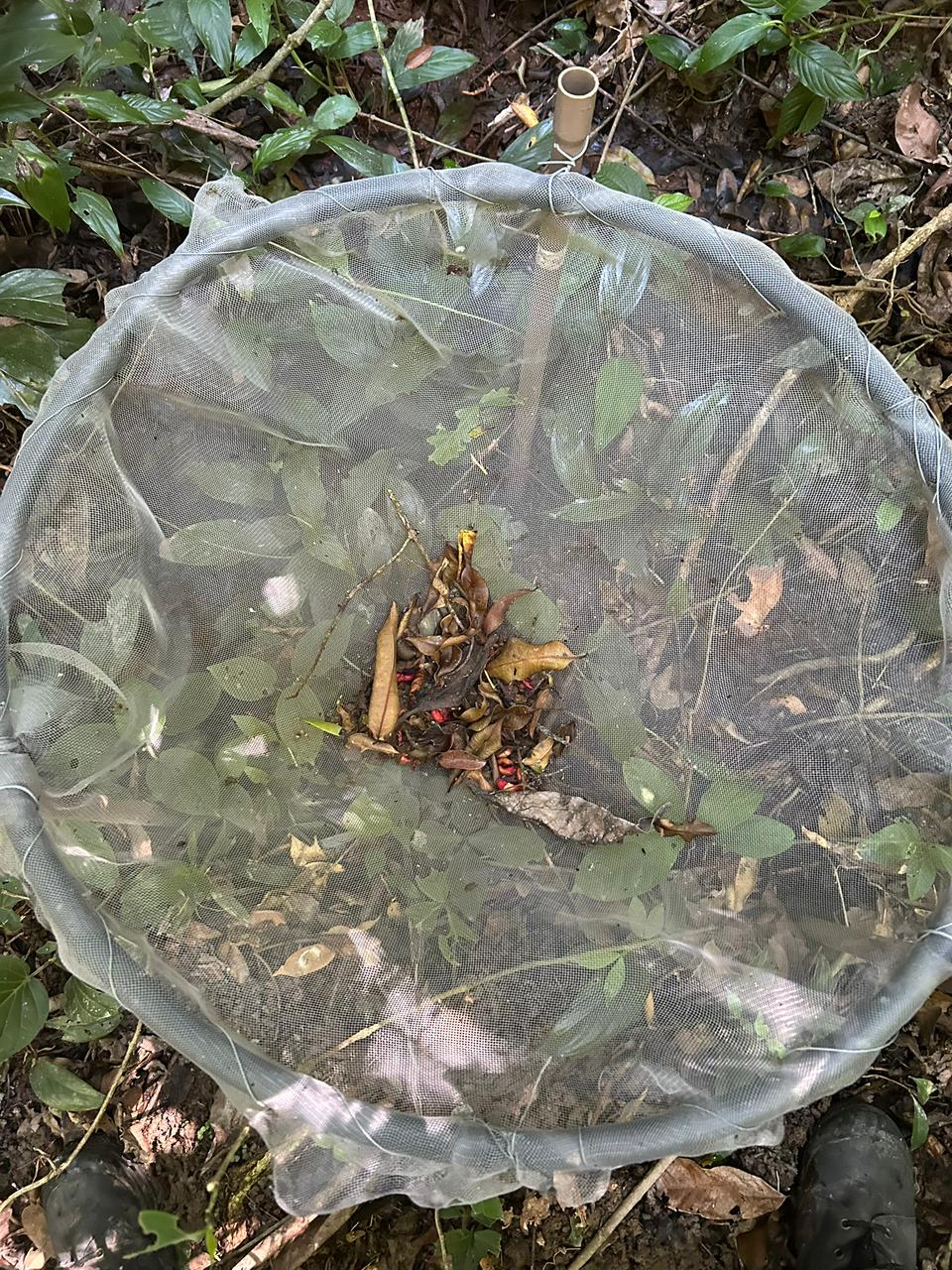
The study compiled data from seed traps across 52 Atlantic Forest fragments throughout Brazil (photo: Luis Felipe Daibes/Rio de Janeiro Botanical Garden)
Due to logistical challenges, studies of this type are usually conducted in one location over the course of one year. Seed traps are placed in the understory, beneath the tree canopy. Each month, researchers collect and identify the seeds.
“No study had ever been conducted covering the entire extent of the biome, from the Northeast to the South of the country. This lends considerable robustness to our results,” says the researcher.
Dispersal by animals
Seeds can be dispersed by animals (zoochory) or by wind, air, rivers, or simply by falling to the ground (non-zoochory). The researchers confirmed that areas with higher rainfall have more zoochorous seeds. These seeds come from trees that produce succulent fruits that attract birds and mammals. These animals can then disperse the seeds far from the parent tree, including to other forest fragments.
One consequence of deforestation is the loss of species with large seeds because large fruit-eating animals are the first to become locally extinct due to habitat loss.
Through seed fall data, the study found that forest fragments with low forest cover, especially in drier areas, tend to be dominated by a limited set of pioneer species.
“Pioneer species, which grow rapidly and don’t necessarily depend on wildlife for dispersal, are important for forest regeneration, providing shade for slow-growing species. However, a functional ecosystem can’t be built with them alone,” Daibes notes.
In many areas, a history of deforestation and fragmentation has altered the pattern of seed dispersal. Fragments with few generalist species surrounded by monocultures, such as sugarcane, are common. These isolated patches cannot receive or supply seeds since there is nowhere to disperse them beyond their own area.
“If only a single fragment can be conserved within an agricultural area, it’s important that the region have some surrounding forest cover. If there are several other fragments within a five-kilometer radius with more than 60% forest cover, there’s a greater chance of seed exchange between them, thereby maintaining diversity,” the researcher explains.
In this context, he adds that the selection of legal reserve areas on rural properties and public conservation areas could prioritize sections with greater forest cover and adjacent areas that can connect with one another.
The article “Landscape features predict broad-scale seed rain patterns across fragments of the Brazilian Atlantic Forest” can be read at besjournals.onlinelibrary.wiley.com/doi/10.1111/1365-2745.70328.
Source: https://agencia.fapesp.br/58860


