


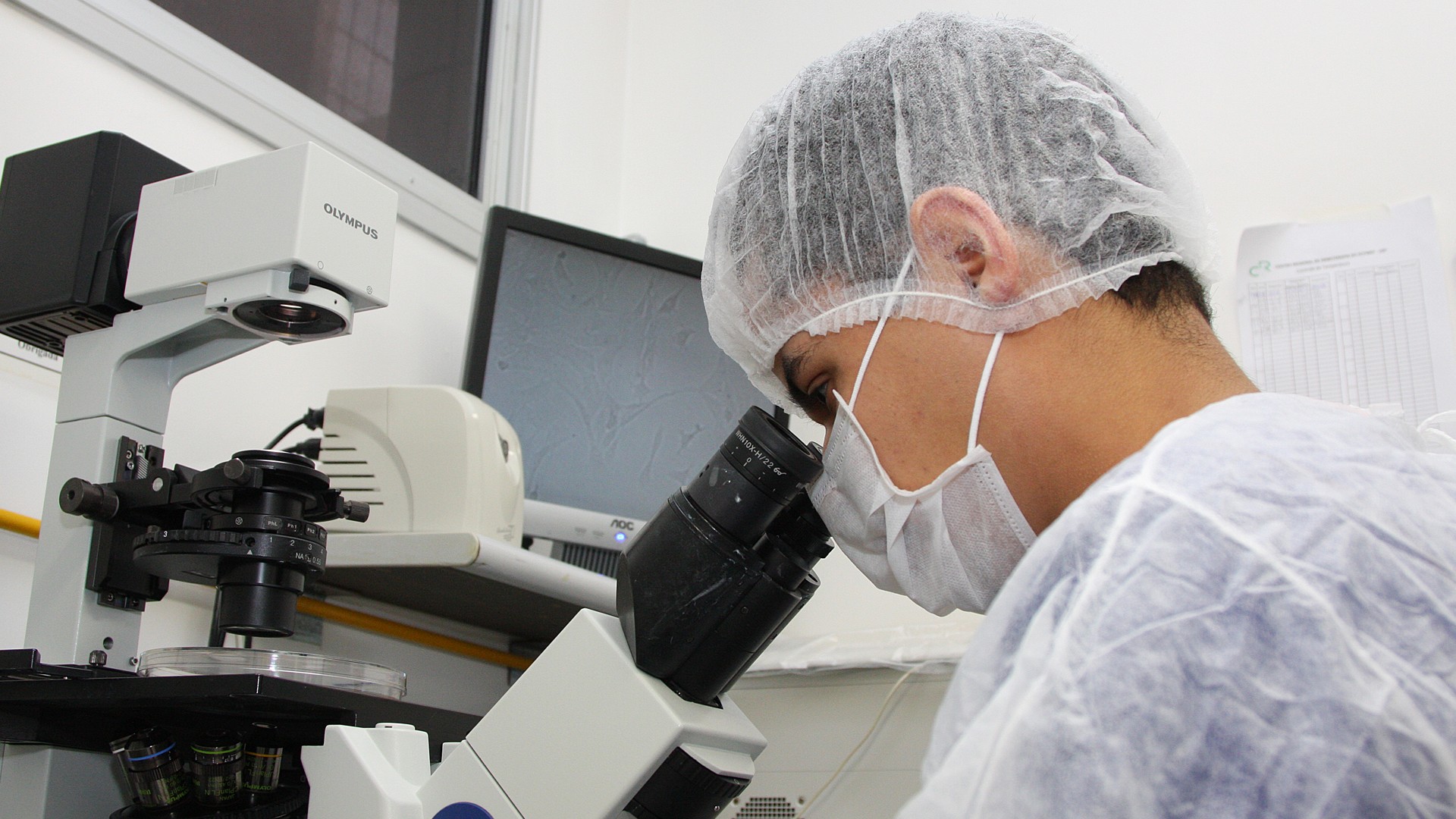
This was the first study to determine the prevalence of these variants using such a large Latin American sample (photo: Freepik)
Published on 12/15/2025
By Maria Fernanda Ziegler | Agência FAPESP – Squamous cell carcinoma is one of the most common and aggressive types of cancer in the head and neck region. It is the fifth most common cancer and the sixth leading cause of cancer death. Accounting for about 95% of cancer cases in this region, the condition has a low five-year survival rate, even with radical surgical intervention, which often triggers recurrence, progression, and metastasis.
As if the difficult prognosis were not enough, this type of cancer has an even more challenging category: the histopathological variants. These rare subtypes, detectable only through microscopic analysis, can exhibit unpredictable behaviors and require specific medical approaches that are often unfamiliar to healthcare professionals.
After analyzing more than 1,400 cases of squamous cell carcinoma of the head and neck, a team of Latin American researchers found that these variants are prevalent in 4.6% of cases. Previous estimates pointed to rates between 5% and 15%. The study was supported by FAPESP and published in the journal Annals of Diagnostic Pathology.
“For years, the medical literature indicated that between 5% and 15% of squamous cell carcinomas were histopathological variants. However, when investigating the origin of these statistical data, we found that they were based on studies without population samples or large case series, relying only on small samples. Even so, these data were repeated over time,” says Jorge Esquiche León, a professor at the Ribeirão Preto Schools of Medicine and Dentistry at the University of São Paulo (USP) in Brazil and coordinator of the study.
Symptoms include wounds that do not heal, whitish plaques and/or reddish spots, as well as tumor masses with progressive destruction. In addition to smoking and excessive alcohol consumption, infection with human papillomavirus (HPV) is an important cause of head and neck cancer. However, the study revealed that, while HPV is associated with up to 70% of oropharyngeal cancer cases in Europe and the United States, in Latin America, this rate is much lower, at around 25% in Brazil.
Léon explains that in these cases, the cause directly impacts the prognosis of the disease since HPV-positive patients tend to respond better to treatment. “The origin of the tumor [etiology] directly influences its behavior and response to treatment. Therefore, applying a single approach to all cases and ignoring these regional differences is a serious mistake,” the researcher warns.
The researchers point out that this relationship applies specifically to cases affecting the oropharynx, which covers the base of the tongue, soft palate, tonsils, and the sides and back of the throat. When they analyzed occurrences of the disease in other regions of the head and neck, such as the larynx, they noticed a pattern similar to that observed in Europe and the United States, where approximately one-third of cases are associated with HPV infection.
The study was conducted in partnership with the following Brazilian centers: São Paulo State University (UNESP), Araraquara and São José dos Campos campuses; the Federal University of the Jequitinhonha and Mucuri Valleys in Diamantina; the Vale do Rio Verde University (UNINCOR) in Três Corações; the Federal University of Rio de Janeiro; and the State University of Paraíba in Campina Grande. International partners included the Autonomous Metropolitan University in Mexico and the University of El Salvador. All data were collected using the same protocol to ensure consistency in the results.
“Initially, we were conducting a large-scale evaluation of more than 750 cases of conventional squamous cell carcinoma when we noticed a number of samples [of histopathological variants] that didn’t fit the classic classification. From there, we realized that there was a new opportunity: to conduct the first large study to determine the prevalence of these variants using such a large Latin American sample. In the end, everything worked out, and the results showed a lower prevalence than expected,” says Heitor Albergoni da Silveira, the first author, who conducted the study as part of his doctoral research supported by FAPESP.
The article “Histopathological variants of head and neck squamous cell carcinomas: A multicenter study in Latin America” can be read at www.sciencedirect.com/science/article/abs/pii/S1092913425001303?via%3Dihub.
Source: https://agencia.fapesp.br/56823


