


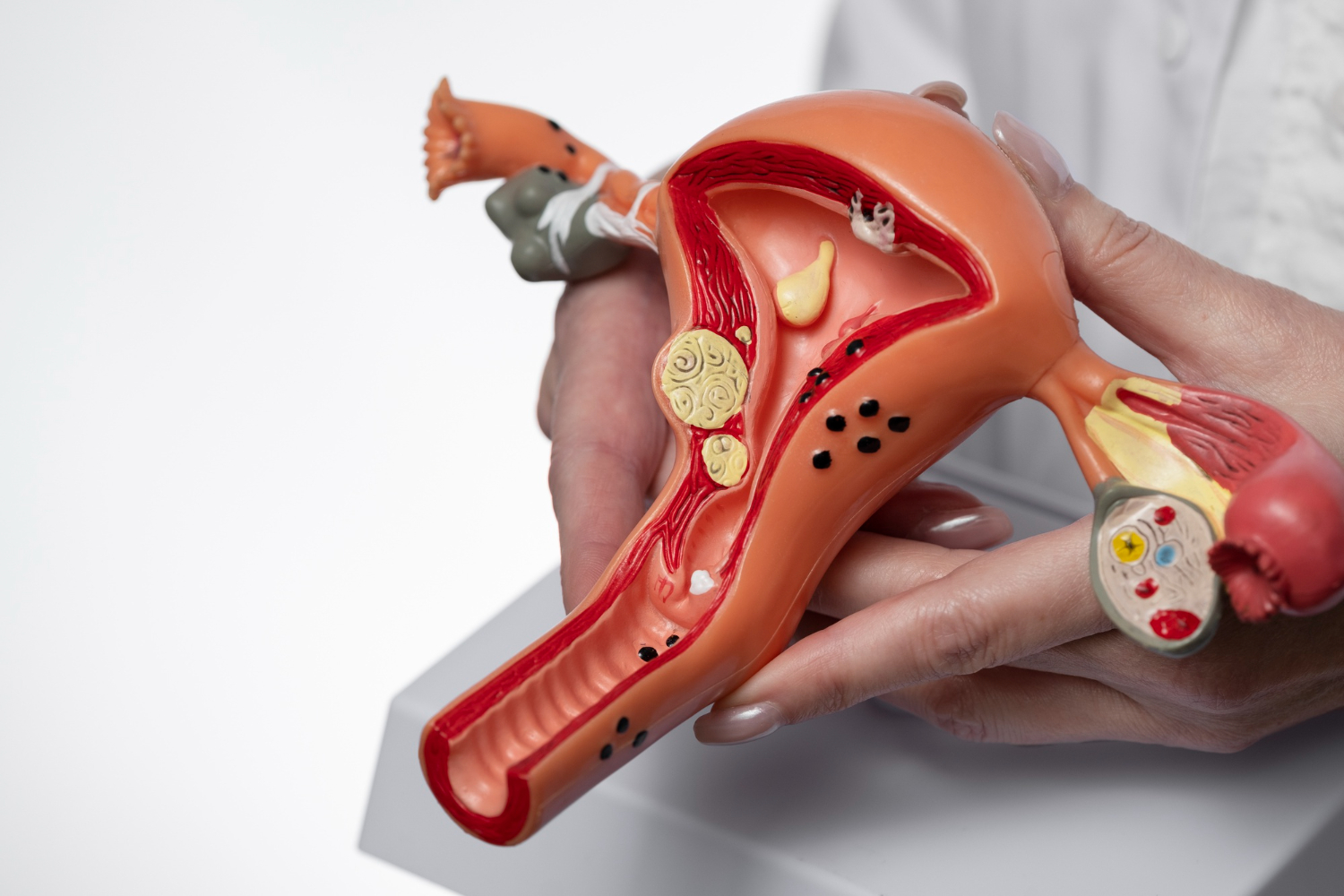
This transplantation method involves removing and freezing fragments of ovarian tissue. Once the patient has completed cancer treatment and is cancer-free, the tissue is thawed and transplanted back into the person (image: Freepik)
Published on 04/27/2026
By Thais Szegö | Agência FAPESP – Administering melatonin via an absorbable sponge improved the effectiveness of autologous ovarian tissue transplantation. This procedure is used to preserve the fertility of children and adolescents who have undergone cancer treatment, as well as patients with contraindications or insufficient time for hormonal stimulation and egg retrieval.
These findings are from research supported by FAPESP and conducted by scientists from the Department of Obstetrics and Gynecology at the University of São Paulo’s Medical School (FM-USP) in Brazil. The study was published in Scientific Reports.
The procedure involves removing and freezing fragments of ovarian tissue. The tissue is stored and, once cancer treatment is complete and the patient is considered disease-free, it is thawed and transplanted back into the patient to restore fertility and endocrine function, both of which tend to be impaired by the medications.
This process has many advantages over other methods, including not delaying cancer treatment, being able to be performed regardless of the menstrual cycle or the need for a partner, and being the only option for children and adolescents.
”During my postdoctoral research, which was conducted under the supervision of Professor Edmund Baracat, we developed a treatment strategy for ovarian grafting using an absorbable sponge to apply adipose-derived stem cells, making it less invasive and less damaging to the tissue,” says gynecologist and obstetrician Luciana Damous, who coordinated the project.
According to the specialist, this made it possible to evaluate other treatment options for the graft, such as using antioxidant and regenerative substances to accelerate tissue revascularization and prevent the loss of ovarian follicles, which is common in this part of the process because it is an avascular graft.
One of these substances is melatonin, which is known for its antioxidant and anti-apoptotic properties. Anti-apoptotic properties prevent programmed cell death, and melatonin has been investigated more frequently to improve ovarian grafts because of these properties. However, little is known about its effectiveness when applied via this type of sponge.
To analyze the method, the scientists conducted a study using an experimental model with female rats that underwent ovariectomy. The ovaries were subjected to slow cryopreservation and stored in liquid nitrogen for 24 hours. After thawing, the scientists performed autologous (each animal received its own pair of ovaries), ectopic (in a location other than the native ovary, in the abdominal cavity over the psoas muscle), and avascular (without surgical anastomosis of two blood vessels) transplants.
“The animals were divided into two study groups: application of an absorbable sponge soaked in culture medium [control group] and an absorbable sponge soaked in melatonin [experimental group]. They were then monitored for 30 days after transplantation, with daily collection of vaginal smears to monitor the functional recovery of the transplanted ovaries,” Damous explains.
Finally, the animals underwent a second operation to collect the ovarian grafts and perform the necessary analyses. The results showed that ovarian function returned in all of the animals. Those that received melatonin showed increased vascularization and reduced apoptosis in the corpus luteum, a temporary ovarian structure formed after ovulation from a ruptured follicle. This occurred without inducing inflammation or fibrosis, which may improve the viability of the ovarian graft.
The article “Frozen-thawed ovarian autografts treated with scaffold-based melatonin delivery in rats” can be read at link.springer.com/article/10.1186/s12958-026-01540-1.
Source: https://agencia.fapesp.br/57914


