


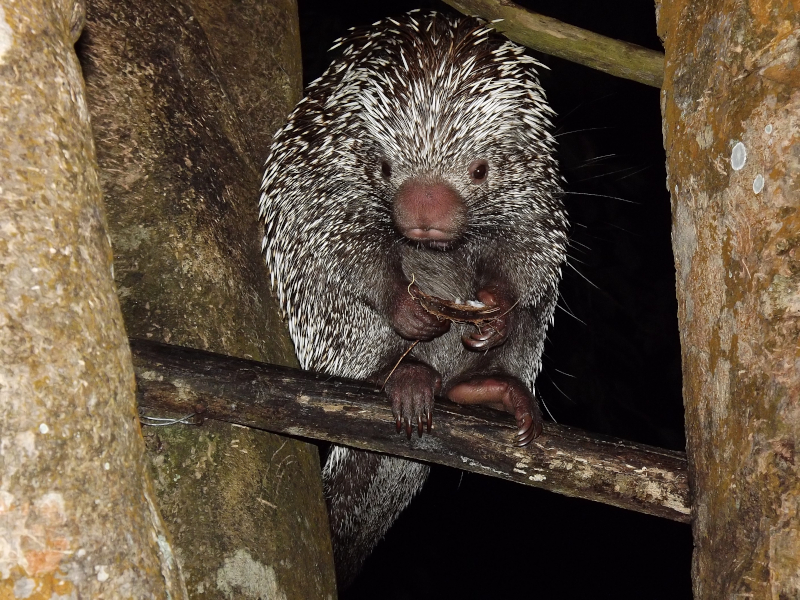
Remained in Brazil: Baturité porcupine (Coendou baturitensis), collected in the Serra de Baturité in the municipality of Aratuba, Ceará state, by Hugo Fernandes-Ferreira and described in 2013 by Anderson Feijó and Alfredo Langguth (UFPB) (photo: Fernando Herberson Menezes)
Published on 08/10/2026
By André Julião | Agência FAPESP – According to a study conducted by Brazilian scientists and published in the journal NPJ Biodiversity, most of the new mammal species described over the past 35 years are housed in institutions in countries of the so-called Global North, even though the vast majority of them were discovered in poor or developing countries in the Southern Hemisphere.
The study analyzed 1,116 new mammal species described between 1990 and 2025. It concluded that 95% of the species were native to the Global South, a group of emerging countries in Latin America, Africa, Asia, and the Caribbean with similar socioeconomic characteristics. This group includes Brazil. However, 60% of the species’ holotypes (the name given to the specimens that serve as references for the scientific description of the species) are housed primarily in wealthy countries in Europe and North America. Conversely, only 22% of species native to the North described during the same period have their holotypes stored outside their country of origin, and even then, they are stored in institutions within the same geopolitical domain, which may include countries such as Australia and New Zealand.
According to the authors, these results demonstrate the impact of geopolitical and socioeconomic inequalities on scientific activity and biodiversity knowledge.
More than 90% of all mammal holotypes stored in the Global North are specimens collected in a different country. In the Global South, by contrast, less than 8% of mammal holotypes are deposited in countries other than where they were collected.
These figures are significantly higher than those for less “charismatic” groups, such as freshwater fish, where 30% of species described after 2000 have holotypes outside their country of origin, and reptiles, where 50% of species described after 1990 are housed outside the country where the animals were discovered.
“The mammal figures surprised us. Even though early colonists collected biological material from their former colonies, we didn’t expect to see such high numbers in recent decades. The problem of scientific neocolonialism is more pronounced in mammals than in other animal groups,” says Mario Moura, a professor at the Federal University of Paraíba (UFPB) and the first author of the study.
Moura is an alumnus of FAPESP’s Young Investigator Program and received a fellowship at the Institute of Biology at the State University of Campinas (IB-UNICAMP).
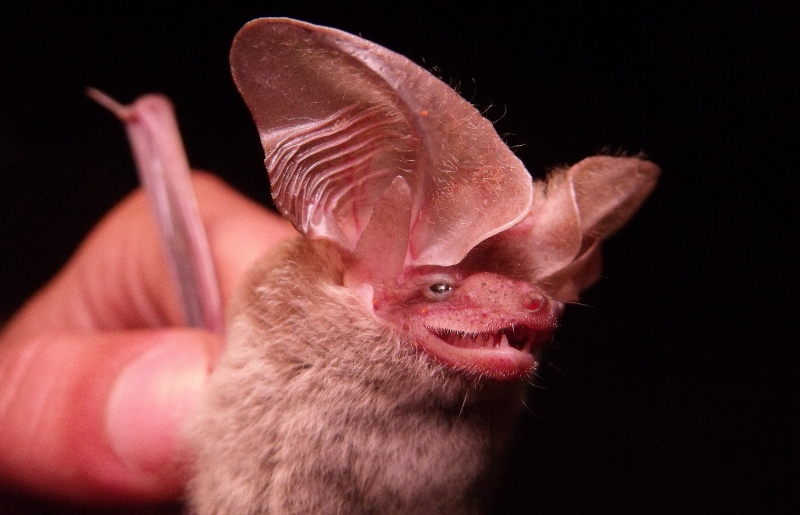
Remained in Brazil: Histotus diaphanopterus, a bat collected in the Boqueirão da Onça region in the municipality of Santo Sé, Bahia state (photo: Patrício Rocha)
Brazil is one of the best countries in the group. The country led in the number of mammal discoveries during the period analyzed, with 133 new species described. Of all these holotypes, 108 (more than 80%) remained in national institutions. Nevertheless, according to the authors, the results provide new evidence of the persistence of the practice known as “parachute science,” whereby foreign scientists, primarily from the Global North, collect biological materials or fossils in countries of the Global South and take them back to be deposited and researched in their home countries, often without involving local researchers in the work based on that material.
In a previous study, Moura and his team found that “parachute science” was responsible for most descriptions of terrestrial mollusks (read more at agencia.fapesp.br/56702). Another study supervised by Moura showed that, despite having far fewer native species described between 1990 and 2025, Northern countries published more robust studies on this biodiversity. This is partly because they have more advanced analytical techniques and equipment (read more at agencia.fapesp.br/57687).
This study is being published at a time when Brazil is seeking to repatriate other scientific materials, including dinosaur fossils taken to foreign institutions.
After successfully repatriating one set of fossils, negotiations are underway to return at least one more.
Inequality
Anyone describing a potential new species, whether plant or animal, must have access to the holotype of the most closely related species in order to compare the two and confirm that the specimen is indeed a new discovery. For this reason, holotypes are essential to documenting biodiversity.
“Accessing material from one’s own country that’s held at a foreign institution requires resources that aren’t always available, which delays the generation of knowledge,” says Jhonny Guedes, co-author of the study. Guedes conducted the study during his postdoctoral fellowship at IB-UNICAMP with funding from FAPESP. He is currently completing an internship at the Museo Nacional de Ciencias Naturales in Spain, also with a FAPESP fellowship.
Additionally, some new species are described as a result of taxonomic revisions. During these revisions, specimens held by institutions in different countries are compared. Sometimes, state-of-the-art genomic analysis techniques are used that were unavailable when the specimens were originally collected.
This type of study often results in the description of new species and, occasionally, entire genera (read more at agencia.fapesp.br/56495 and agencia.fapesp.br/55323).
“Since these specimens are scattered across different natural history museums and biological collections at foreign universities, European and North American researchers have much more material at their disposal to conduct their studies, even when it comes to species from South America, Africa, or Asia,” adds Matheus Moroti, another co-author and postdoctoral fellow at IB-UNICAMP who is currently completing an internship in Spain.
Causes and solutions
Madagascar ranks second only to Brazil in the number of species discovered during the period analyzed. However, the country faces a very different situation. A total of 90 new species were discovered on the African island during this period, but only 14 of them remain in the country.
Meanwhile, researchers from the United States described 324 new species during the same period, but only five were native to their territory. The rest were imported. Of the 53 countries analyzed in the study, 20 (17 of which are in the Global South) have only holotypes of native mammals within their territory. Another 17 countries, mostly in Europe, have only foreign mammals in their collections.
The researchers cross-referenced the data with various socioeconomic indicators. A country’s chances of retaining the holotypes of its native species increase with the amount of skilled labor, even if investment in science and technology is not particularly high relative to GDP. The presence of scientific institutions and stricter environmental legislation also positively contribute to retention, as is the case in Brazil.
To mitigate the problem in the short and medium term, the researchers propose several measures divided into three categories: governance, infrastructure, and access. Each category has different levels of priority and cost. However, the repatriation of all this material remains the most important measure, though it is unrealistic in the short term, according to the authors.
One high-priority, low-cost governance measure would be for scientific journals to adopt mandatory specimen deposit plans similar to current editorial policies for making data and codes available.
In the proposed version of these plans, authors of articles describing new species would be required to specify where the holotypes from their studies are deposited. They would give priority to institutions near the species’ location, ensuring accessibility to local scientists.
Another measure proposed by the authors is the creation of mobility funds. Through these funds, institutions in the Global North would issue calls for proposals to fund trips by Global South researchers to access their collections.
Another structural measure would be for institutions in the Global North to invest a percentage of their major research project budgets in partner institutions in the Global South located near sites where specimens are collected. These funds would strengthen infrastructure for storing and studying biodiversity and would also fund fellowships and support staff.
“Meaningful intellectual partnerships – ones that are mutually beneficial and respect the historical and socioeconomic differences between countries – are a one-way path for scientists in both the Global North and the Global South. The benefits extend beyond a more just and inclusive science, strengthening the Global South’s autonomy and accelerating our documentation of biodiversity,” Moura concludes.
The article “Local expertise anchors biodiversity documentation, but geopolitical power drives parachute discovery” can be read at nature.com/articles/s44185-026-00137-6.
Source: https://agencia.fapesp.br/58938


