


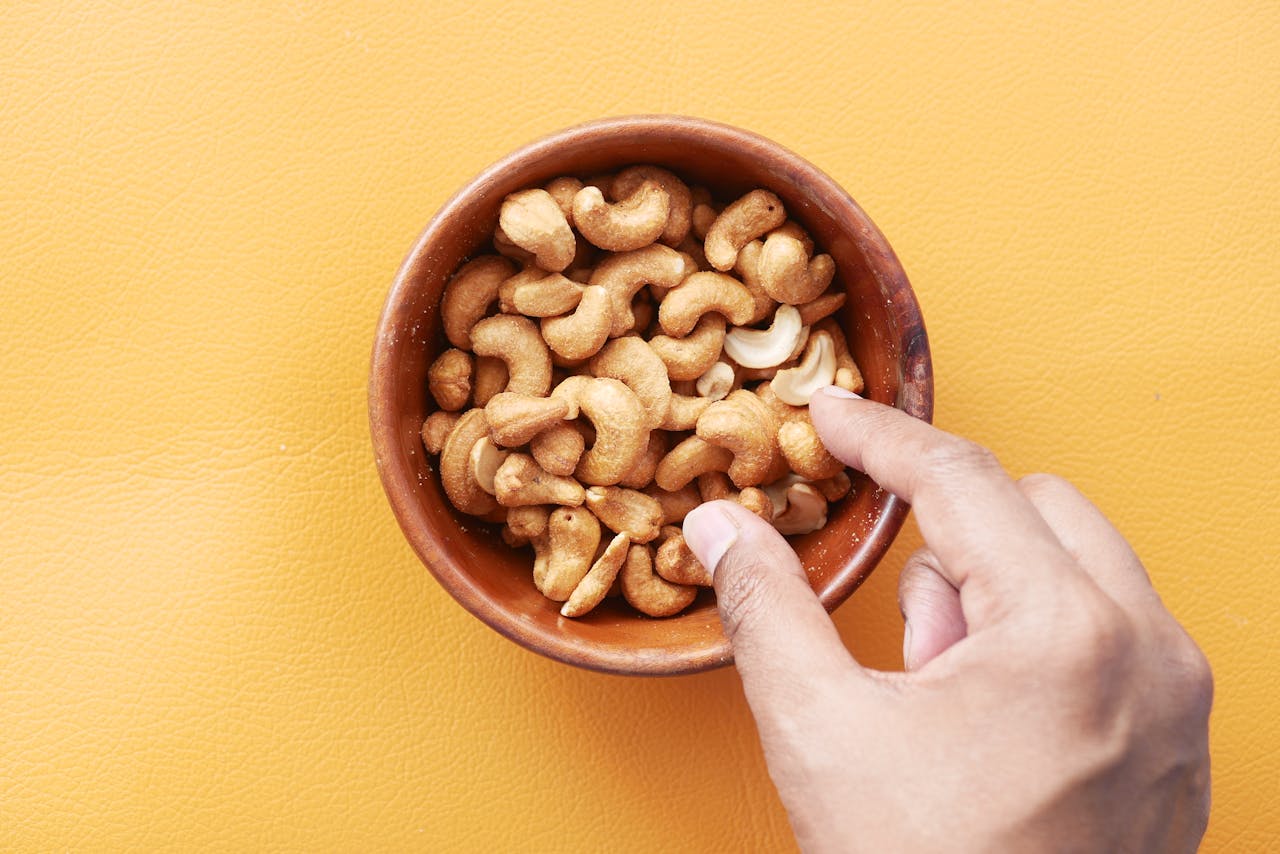
Researchers performed an in vitro experiment simulating the gastrointestinal digestion process and its conditions regarding temperature, agitation, pH level, and enzymatic composition; after the assay, quantities of manganese and zinc remained below the detection limit (photo: Towfiqu barbhuiya/Pexels)
Published on 06/08/2026
By Thais Szegö | Agência FAPESP – The presence of minerals in oilseeds, such as Brazil nuts (Bertholletia excelsa) and cashews (Anacardium occidentale), does not guarantee that the body will utilize them. A study conducted at the Diadema campus of the Federal University of São Paulo (UNIFESP) in Brazil and published in the journal Química Nova evaluated the bioavailability of these nutrients. Bioavailability is defined as the fraction of the mineral actually released during simulated gastrointestinal digestion and potentially available for absorption.
“The line of research I’ve been developing focuses on evaluating the actual nutritional value of the minerals present in the diet. In this context, we study foods of great economic importance in Brazil. Our group not only determines the total quantity [concentration] of elements present in foods, but also uses assays that simulate gastric and intestinal digestion processes on those samples,” explains Angerson Nogueira do Nascimento, a chemist, associate professor at UNIFESP, and coordinator of the study. It was conducted in partnership with the group led by Professor Dário Santos Junior.
With support from FAPESP, the researchers focused their investigation on two widely consumed oilseeds in Brazil. Their goal was to analyze the behavior of essential minerals during simulated human digestion while taking into account the action of gastric and intestinal juices, as well as the characteristics of the digestive tract.
They evaluated four minerals: copper, which is important for red blood cell formation, energy production, and immune system maintenance; magnesium, which is essential for bone health and muscle function; manganese, which has antioxidant properties and plays a role in bone and connective tissue formation; and zinc, which is essential for the immune system, wound healing, and protein synthesis.
After selecting the samples, the scientists determined the total concentration of these minerals in the nuts. They then assessed the bioaccessibility of the nutrients using an in vitro gastrointestinal digestion assay because the total amount of a nutrient present in food does not necessarily correspond to the amount absorbed by the body.
The researchers highlighted the difference between bioaccessibility and bioavailability. Bioaccessibility refers to the fraction of a nutrient that is released from the food matrix in the gastrointestinal tract and is available to be absorbed. Bioavailability, on the other hand, corresponds to the portion actually absorbed and utilized by the body, taking into account processes such as distribution, metabolism, and excretion. Bioaccessibility can be assessed in a laboratory through in vitro assays, but bioavailability requires studies with animals or humans. These studies demand significant resources and require approval from a research ethics committee.
For the experiment, the researchers simulated the conditions of the human digestive system in a laboratory setting. This included controlling the temperature, agitation, pH level, and enzymatic composition. Then, they compared the results with the daily recommended intake of minerals.
The results showed that approximately 56% of the copper and 52% of the magnesium in cashews were available for absorption after the simulated digestion process. However, manganese and zinc were found in insufficient quantities for reliable measurement (below the detection limit of the instrumental technique).
In Brazil nuts, approximately 50% of the copper and 28% of the magnesium were bioaccessible. Manganese and zinc remained below the detection limit after the test.
Therefore, although the analyzed nuts contained considerable amounts of copper, magnesium, manganese, and zinc, only a portion of these elements is available for absorption by the human body.
“The results demonstrated that assessing a food’s nutritional value shouldn’t be limited to total nutrient concentration. It’s also essential to investigate how these elements behave under conditions that simulate the digestive system to estimate their actual availability for absorption,” says Nascimento.
According to the researcher, the analyzed nuts should not be considered exclusive sources of these nutrients, but they can contribute to a balanced and diverse diet in a complementary way.
The article “Nutritional contribution and bioaccessibility of essential elements in edible nuts” can be read at quimicanova.sbq.org.br/pdf/AR2025-0264.
Source: https://agencia.fapesp.br/58328


