


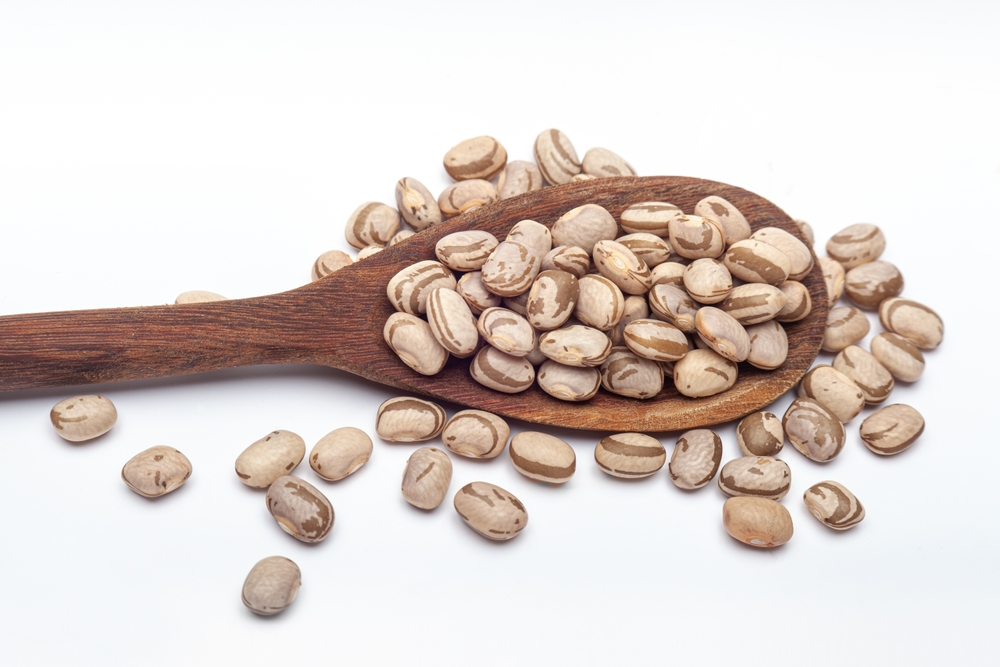
Brazil is the world’s second-largest producer of beans. The pinto variety accounts for about 54% of its annual production of three million metric tons. Processing these beans generates between 1-5% broken beans, called “bandinhas,” which lose their commercial value (image: Shutterstock)
Published on 08/31/2026
By Elton Alisson | Agência FAPESP – In Brazil, the most widely consumed type of bean in the country, the pinto variety, is about to reach consumers’ tables in an unprecedented way: as an ingredient in processed foods. This is possible thanks to a concentrated protein derived from the “bandinha,” the broken, low-value beans left over from processing the legume.
This innovation is the result of the efforts of researchers at the Integrated Biotechnology Platform for Healthy Ingredients (PBIS), which is based at the Institute of Food Technology (ITAL) in Campinas, in the state of São Paulo. According to the team, the new ingredient not only adds value to an agricultural byproduct but also helps reduce the national food industry’s dependence on plant-based proteins derived from soybeans or peas, most of which are currently imported.
“Our goal was to obtain a protein from a Brazilian plant source. Since Brazil is a major producer of pinto beans, we thought of transforming them into a protein ingredient for use by the food industry,” said Mitie Sonia Sadahira, a researcher at ITAL and project coordinator. She made this statement during a meeting held in Campinas on August 13 to present the results of the PBIS project.
The platform was created in 2021 with support from FAPESP through the Science Centers for Development (SCDs) program. It brings together ITAL, the University of São Paulo (USP), the State University of Campinas (UNICAMP), the Shunji Nishimura Technology Foundation, and nine food sector companies. The goal is to develop healthy, sustainable, and innovative ingredients from domestic raw materials, such as beans.
Brazil is the world’s second-largest producer of this legume. The pinto variety accounts for about 54% of its annual production of three million metric tons. However, processing the beans inevitably results in 1-5% broken beans, known as “bandinhas,” that lose their commercial value.
“We came up with the idea of adding value to that byproduct,” said Isabela Emiliorelli, a researcher at ITAL and a participant in the project.
A more environmentally friendly process
The researchers used dry fractionation to obtain the protein. Unlike traditional chemical methods, this process is considered more environmentally friendly because it does not use solvents and requires less water and energy than conventional wet extraction methods.
The bean is ground into whole-bean flour, which is then mechanically separated into two fractions: one starchy and the other protein-rich. “In addition to being a more sustainable technology, a single process yields two types of ingredients,” Emiliorelli explained.
The protein fraction obtained had a protein concentration ranging from 40% to 50%. However, the major advantage revealed by laboratory analyses was the nutritional quality of the ingredient, according to the researchers. They found that the ingredient exceeds the targets established by the Food and Agriculture Organization of the United Nations (FAO) for the amino acid profile of pinto bean protein, containing all the amino acids that are essential for the human body. Consequently, it is nutritionally self-sufficient.
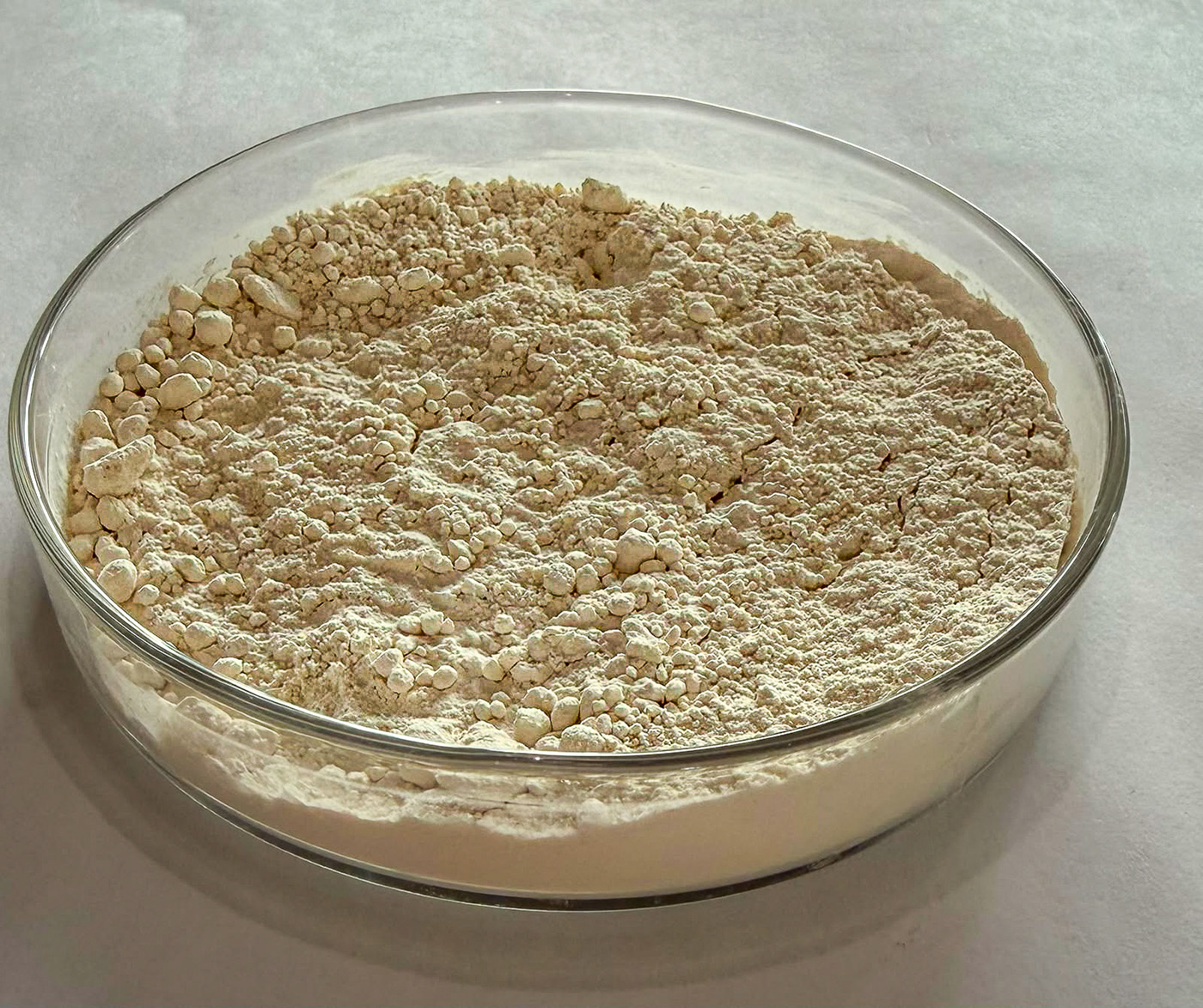
The protein fraction of the flour (photo) contains all the essential amino acids for the human body. It also has a neutral flavor and light color (photo: Antonio Carriero/ITAL)
“Typically, plant proteins lack one or two essential amino acids [compared to what is needed], so they must be supplemented with cereal protein. In the flour we obtained, that wasn’t the case,” said Sadahira.
Thanks to thermal pretreatment methods applied to the beans before milling, the content of antinutritional factors naturally present in beans, such as phytates, protease inhibitors, tannins, lectins, and oligosaccharides, was reduced by up to 95%. These compounds hinder the absorption of essential nutrients and cause digestive discomfort.
This drastic reduction, combined with the fractionation process, resulted in a protein ingredient with a digestibility rate exceeding 60%.
In addition to its nutritional value, the researchers overcame one of the greatest commercial challenges of plant-based proteins – the residual earthy flavor (“beany taste”) and dark color.
“Through thermal pretreatment, we were able to significantly improve the sensory quality of the protein, which has a neutral flavor and light color, making it more appealing to consumers and easier to incorporate into food formulations,” said Sadahira.
Possible uses
The researchers developed a portfolio of applications to demonstrate the versatility of the new ingredient and provide suggestions to the food industry. One application is a sugar-free instant cappuccino powder with 5 grams of protein per serving. The researchers also created instant powders combined with tropical fruits, such as mango and passion fruit. These powders were used to formulate flavored, fermented, plant-based beverages without the need for artificial flavors or colors.
Even the starchy fraction, which contains 10-20% protein, was utilized. It was used to create plain, salty, and sweet snack-type treats made from dehydrated mango powder enriched with 8% protein. “From a single raw material, using the same technology, we were able to produce two valuable ingredients,” emphasized Kaciane Andreola, a postdoctoral researcher at ITAL and a participant in the project.
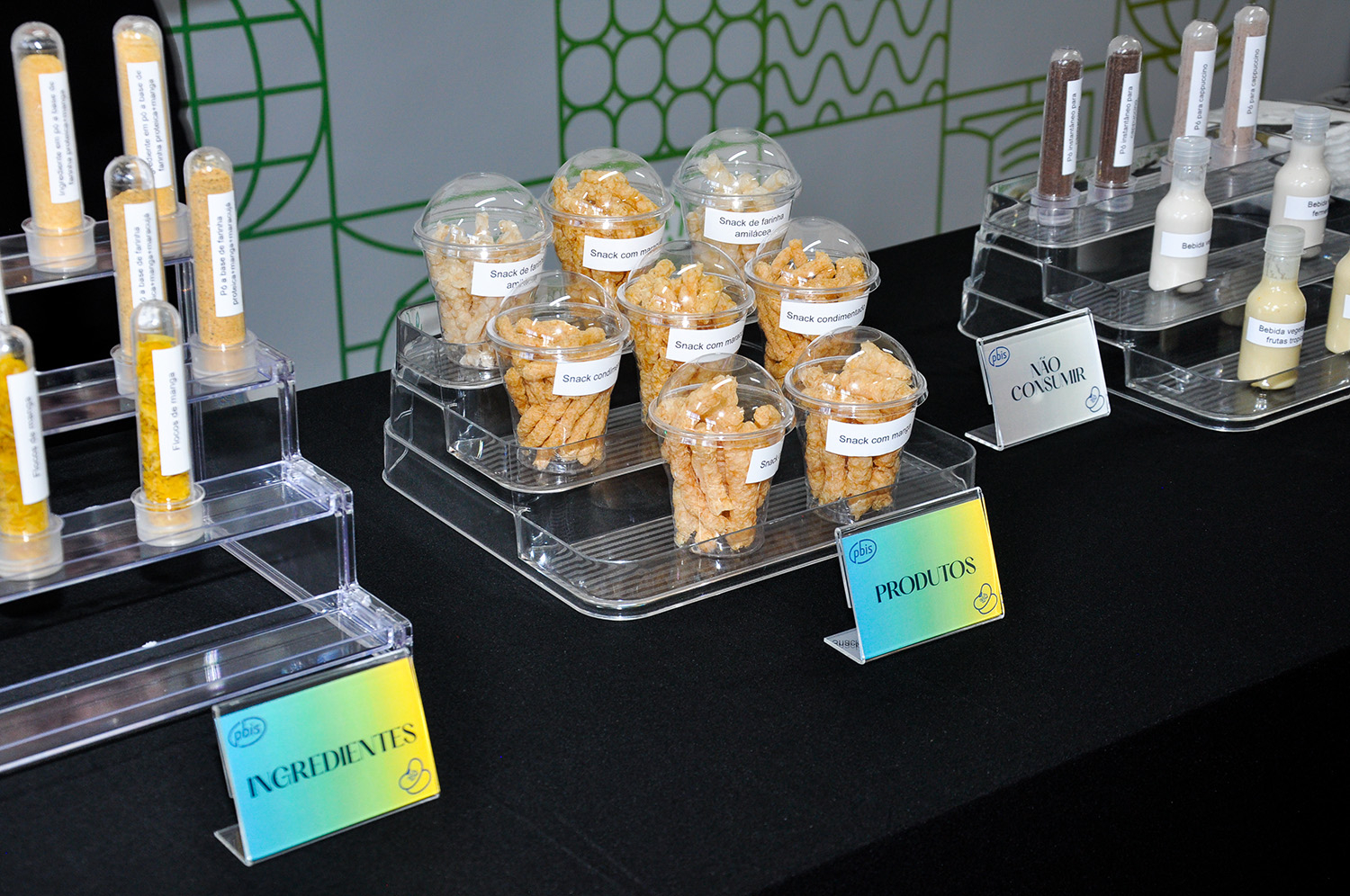
Left: samples of the protein and starch fractions of bean flour. Center: ingredients used in snacks. Right: transformed into fermented beverages, instant cappuccino powders, and concentrates with tropical fruits (foto: Antonio Carriero/ITAL)
The technologies for extracting protein from beans and applying it to food products will be offered to the market in the form of technology packages, ready for transfer, following an open innovation model adopted by PBIS.
Companies participating in the platform have invested directly in research and development and have exclusive priority in licensing the resulting patents and processes. Over four and a half years of operation, these processes have resulted in the creation of more than 30 food ingredients and 20 new industrial processes.
If the partner companies do not express commercial interest within the predefined timeframe, the solutions will be made available to the general market, where they can be licensed by other food companies, startups, or academic spin-offs.
In the case of pinto bean protein specifically, the ingredient is being validated in a manufacturing setting through industrial-scale processing tests conducted by SL Alimentos, a partner company of the project.
“We’ve reached TRL [Technology Readiness Level] levels 5 and 6 in terms of product, process, and application,” Gisele Anne Camargo, the project’s executive manager and principal investigator, told Agência FAPESP. The technology maturity scale for solutions ranges from 1 to 9. “The next steps are up to the companies,” she noted.
Maria Teresa Bertoldo Pacheco, the PBIS project coordinator, noted that the platform represented a shift from ITAL’s traditional approach. “Although we’ve always had partnerships with companies, we used to work on a turnkey basis. The PBIS model has been completely different, bringing together scientists, companies, and the government – through FAPESP – to identify the sector’s technological needs and help boost the competitiveness of Brazilian food industries,” she said.
Source: https://agencia.fapesp.br/59092


