


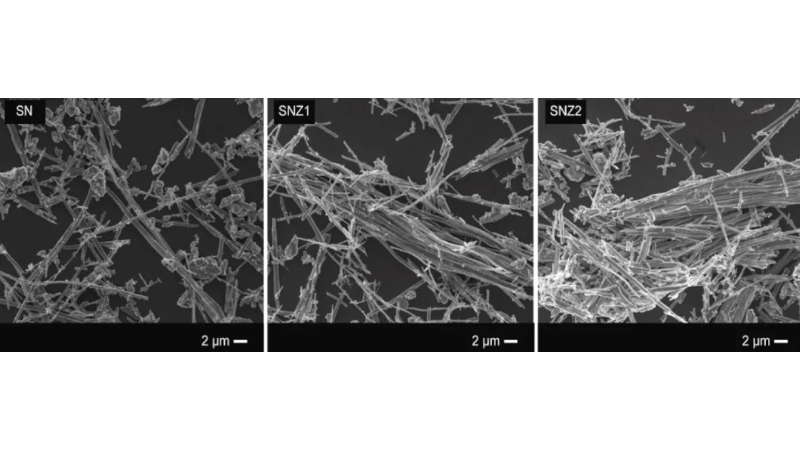
The study evaluated the direct antibacterial activity of NaNbO3 against Escherichia coli, Staphylococcus aureus, and Klebsiella pneumoniae (image: Daiane Fernandes et al./Ceramics International)
Published on 08/19/2026
Agência FAPESP* – Researchers from the Center for the Development of Functional Materials (CDMF) collaborated on a scientific study revealing the potential of sodium niobate (NaNbO3) as a material with high photocatalytic activity (the ability to accelerate a chemical reaction when “activated” by light) and antibacterial properties, capable of degrading pollutants and inactivating clinically significant bacteria.
The CDMF was a FAPESP Research, Innovation, and Dissemination Center (RIDC) active from July 2013 to July 2026, a period during which it was based at the Federal University of São Carlos (UFSCar).
The study examined samples of NaNbO₃ produced by microwave-assisted hydrothermal synthesis with different quantities of zinc ions incorporated into the crystal structure. The objective was to evaluate how zinc doping affects the ability of the material to photodegrade organic dyes and inactivate pathogenic bacteria when exposed to light.
The results show that adding small amounts of zinc (0.02 mmol) reduces the bandgap energy of the material (the energy barrier that an electron must overcome to become reactive), favoring the generation of electron-hole pairs (negative and positive charges that initiate the chemical reaction) when exposed to light. This electronic alteration resulted in the complete degradation of a model dye (Rhodamine B) in approximately 45 minutes under ultraviolet light, demonstrating the high photocatalytic activity of the material.
The study was published in the journal Ceramics International.
Action against bacteria
In addition to evaluating the photodegradation of pollutants, the study examined the direct antibacterial activity of NaNbO₃ against three clinically relevant bacterial species: Escherichia coli, Staphylococcus aureus, and Klebsiella pneumoniae.
Samples of sodium niobate without zinc demonstrated a strong ability to inactivate all three species, proving that the material can act as an effective antimicrobial agent without additional external stimuli.
Doping with zinc also conferred antibacterial activity, though it depended on the dopant concentration. The dopant is the compound used to modify the properties of the material. These results expand our understanding of how fine chemical adjustments can modulate the photocatalytic and biocidal properties of ceramic materials.
CDMF researchers were involved in the experimental methodology and characterization of the materials as part of a multidisciplinary team including experts in materials science, surface chemistry, and the biological properties of nanomaterials.
This research is an important step in finding sustainable, multifunctional materials that can treat chemical and biological contaminants in aquatic and sanitary environments. These materials have potential applications in water treatment, disinfection, and environmental remediation systems.
The article “Sodium niobate with high photocatalytic activity for the removal of organic dyes and the inactivation of Escherichia coli, Staphylococcus aureus, and Klebsiella pneumoniae bacteria: the effect of Zn doping on these properties” can be read at sciencedirect.com/science/article/abs/pii/S0272884225020164.
* With information from the CDMF
Source: https://agencia.fapesp.br/59020


