


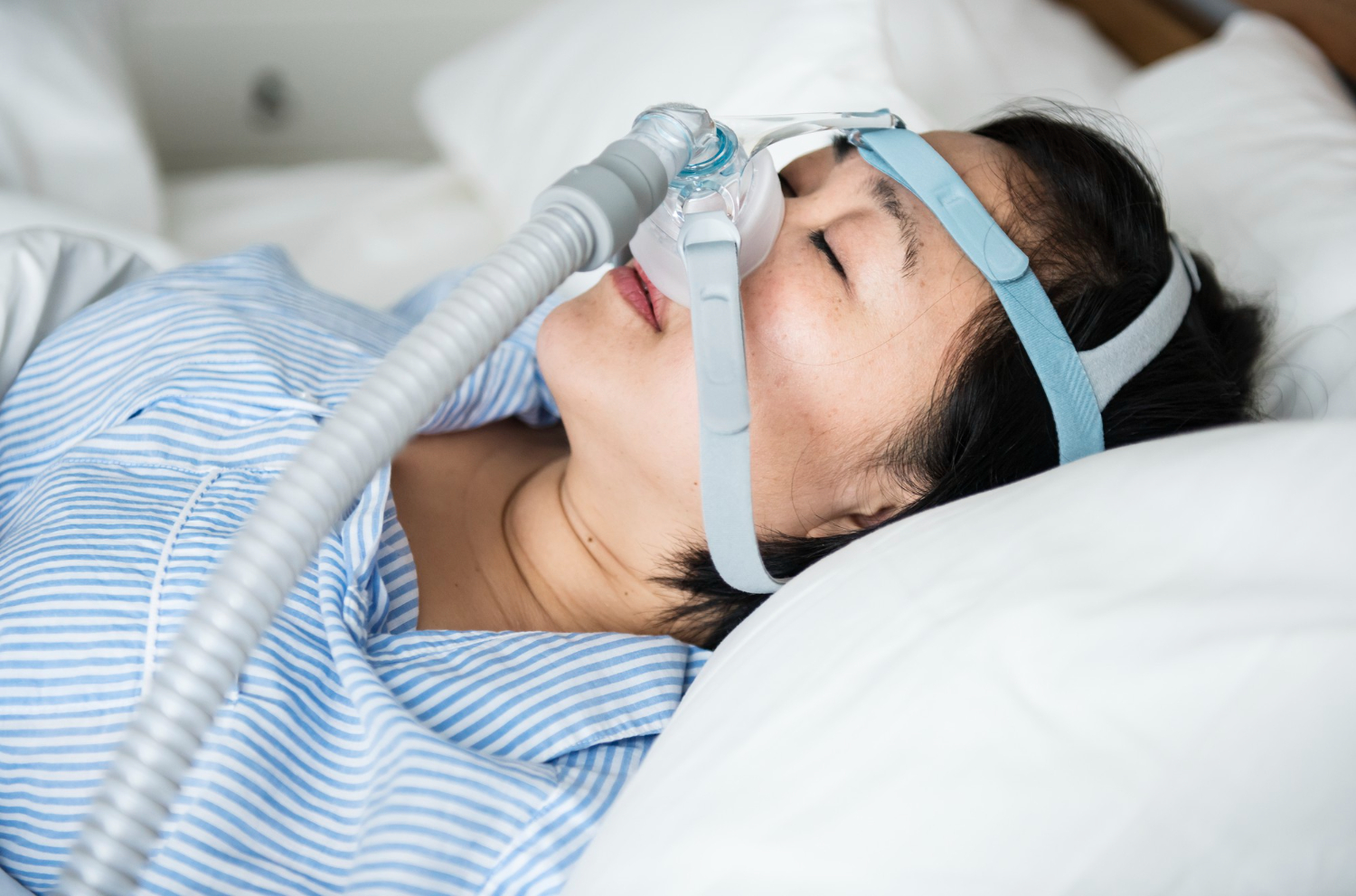
Patients with sleep apnea can treat the condition by using a continuous positive airway pressure (CPAP) machine at night to keep the airways open, as well as by adopting healthy habits that reduce adipose tissue in critical regions of the airways (photo: rawpixel.com/Freepik)
Published on 03/09/2026
By Maria Fernanda Ziegler | Agência FAPESP – Chronic obstructive pulmonary disease (COPD) is known for causing breathing difficulties and limiting everyday activities. Obstructive sleep apnea syndrome (OSAS), on the other hand, is usually associated with loud snoring and daytime sleepiness. However, a study published in the journal Scientific Reports shows that having both conditions has an even more profound impact on patients’ muscle strength and quality.
“Although it’s generally associated only with lung function, chronic obstructive pulmonary disease is systemic, with multiple impacts. When combined with obstructive sleep apnea syndrome, muscle damage worsens, leading to loss of strength and more serious clinical outcomes, such as hospitalizations and increased risk of death, compared to patients with COPD alone. Therefore, we warn that it’s essential to investigate sleep quality in all patients with COPD,” says Audrey Borghi Silva, coordinator of the Cardiopulmonary Physiotherapy Laboratory at the Federal University of São Carlos (UFSCar) in the state of São Paulo, Brazil. Silva is also the author of the study, which was supported by FAPESP.
In the study, the researchers evaluated 44 individuals, equally distributed between patients with COPD combined with OSAS and patients with isolated COPD. The results show statistically significant differences in functional performance between the two groups.
Grip strength, recognized as an indicator of muscle strength, was significantly lower in the group with overlapping diseases, at an average of 26 kgf, compared to 30 kgf in the group with isolated COPD. Similarly, in the six-minute walk test, which is widely used to assess functional capacity, patients with both conditions walked an average of 300 meters, while those with COPD alone walked an average of 364 meters. Distances of less than 350 meters in this test are associated with a higher risk of hospitalization and mortality, which reinforces the negative functional impact of having both COPD and OSAS.
The severity of sleep apnea is typically assessed using the Apnea-Hypopnea Index (AHI), which tracks the number of breathing pauses per hour of sleep. However, the researchers found that muscle quality loss was most strongly associated with the Oxygen Desaturation Index (ODI) rather than the AHI. The ODI measures the frequency of drops in blood oxygen levels during sleep.
“More than poor performance on the tests, the study results indicate that the magnitude of nocturnal oxygen desaturation during sleep is more strongly associated with muscle quality and functional performance than the frequency of respiratory events itself. This suggests that intermittent nocturnal hypoxia, by compromising tissue oxygenation, may be a central pathophysiological mechanism in the loss of muscle mass and function in patients with COPD and OSAS, possibly through oxidative stress, systemic inflammation, and muscle metabolic dysfunction,” says Patrícia Faria Camargo, principal investigator of the study. The work is the result of Camargo’s doctoral thesis.
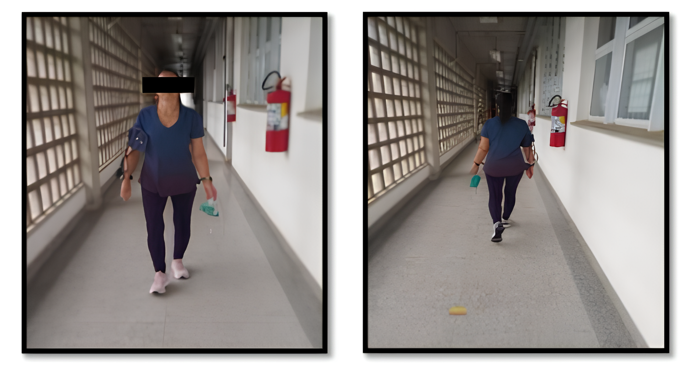
A volunteer patient performs the six-minute walk test, which is used to assess functional capacity (photo: researchers' collection)
The role of systemic inflammation
Camargo explains that both COPD and sleep apnea are associated with systemic inflammation and increased oxidative stress when they occur in isolation. “When combined, these conditions can aggravate damage to mitochondria, known as the energy powerhouses of cells, compromising muscle contraction and regeneration. The result is a cycle of progressive weakening and functional limitation that requires continuous monitoring,” she says.
The study warns of the need to monitor people with both conditions. “The results reinforce the need to screen for sleep-disordered breathing in the COPD population. The finding directly impacts public health policies, clinical protocols, and rehabilitation programs, highlighting the fundamental role of sleep in quality of life,” Camargo says.
Camargo explains that, while COPD is not reversible, it can be controlled through medication, smoking cessation, and lifestyle interventions such as regular exercise and a balanced diet. These measures help preserve muscle mass and cardiorespiratory function. In the case of OSAS, nighttime use of devices such as continuous positive airway pressure (CPAP) keeps the airways open. Physical activity and a balanced diet reduce adipose tissue in critical regions of the airways, helping to decrease obstruction.
“In addition, behavioral measures such as avoiding alcohol and sedatives before bedtime and maintaining proper sleep hygiene contribute to nighttime respiratory balance,” she adds.
The article “Impact of obstructive sleep apnea on functional performance and muscle quality of patients with COPD” can be read at www.nature.com/articles/s41598-025-32126-3.
Source: https://agencia.fapesp.br/57406


