


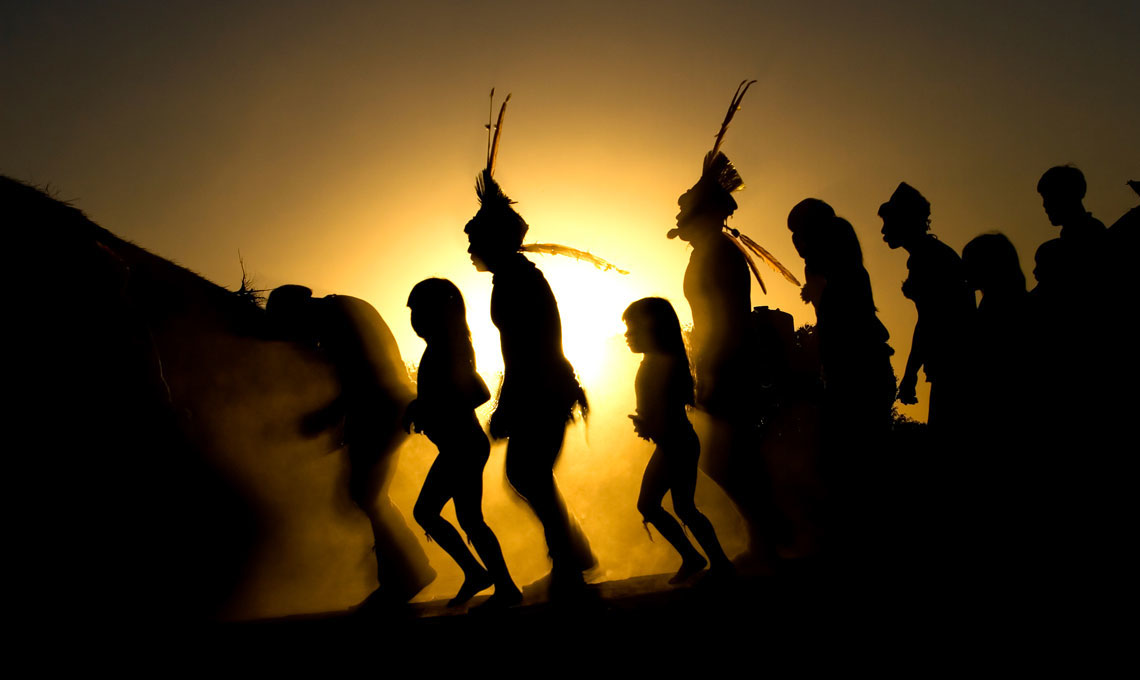
Ethnic groups of the Upper Xingu gather annually at the Quarup. The origin of Indigenous peoples is more complex than previously known (photo: Mário Vilella/FUNAI)
Published on 05/18/2026
By Maria Guimarães | Pesquisa FAPESP Magazine – The Indigenous peoples of South America are descended from three waves of migration. According to a study conducted exclusively by researchers from the continent, one of these waves, which is most represented in the current population, came from Mesoamerica around 1,300 years ago. This finding reveals the greater complexity of the history of Indigenous peoples and their greater genetic diversity than previously anticipated. The research is featured on the cover of the May 7 issue of the scientific journal Nature. “We reached these conclusions through very intensive collaborative work,” says Tábita Hünemeier, a geneticist at the Institute of Biosciences at the University of São Paulo (IB-USP) in Brazil. She coordinated the study, on which she has been working for over a decade, and was surprised by the higher-than-expected genetic diversity.
A total of 128 genomes were fully sequenced and compared to 71 other sequences available in databases. The genomes represented 45 Indigenous groups from eight Latin American countries: Argentina, Bolivia, Brazil, Colombia, Ecuador, Mexico, Paraguay, and Peru. The goal was to estimate the genetic affinities among all Indigenous American groups by taking ancient genomes into account. The researcher celebrates the inclusion of biomedical scientist Putira Sacuena from the Federal University of Pará (UFPA), among the authors. “She was the first Indigenous woman to work in genetic anthropology,” Hünemeier states. The researchers consider Indigenous collaboration in studies concerning native peoples to be a welcome development in the quest to understand their history.
This work adds important information to what is known about the human colonization of South America. The first wave of migration left records dating back up to 12,000 years ago at Lapa do Santo (read more at revistapesquisa.fapesp.br/en/the-peoples-of-lagoa-santa/) and in the Sumidouro cave in the Lagoa Santa region of Minas Gerais state in Brazil, as well as in Chile. Around 9,000 years ago, another migration left distinct marks in the genetic and archaeological record in Peru and Argentina. However, the Middle Holocene period, between 8,000 and 4,200 years ago, brought environmental changes that damaged ecosystems and reduced the availability of resources, affecting human populations as well.
The Indigenous peoples inhabiting the continent today are partly descended from individuals who arrived from what is now Mexico about 1,300 years ago. This third wave had not been documented until now and is a major new finding. DNA analyses also suggest that Indigenous groups became less populous and more isolated from one another after the arrival of Europeans in the 16th century. The study detected signs of inbreeding – which occurs when reproduction happens among small groups with no possibility of migration – among the Sirionó, Suruí, and Karitiana peoples within the Tupi lineage. This indicates a population collapse, which was likely caused by epidemics, enslavement, and disruptions to subsistence and traditional knowledge. A recent recovery can be observed in some regions of western South America. Genetic diversity is higher in Central America and the Southern Cone.
A puzzling discovery was the presence of ancient genomic segments characteristic of Australasians (people from Australia and surrounding islands), Neanderthals (from Europe), and Denisovans (from East Asia) in South American DNA. The hypothesis is that these ancient genes play a beneficial, as yet unknown, role and were maintained by natural selection. While the article focused on diversity and population trajectories rather than functional aspects, the identification of regions associated with immune response, cardiometabolic traits, fertility, and anthropometric traits suggests that future studies may explore the role of human evolution on the continent in greater depth. According to Hünemeier, genetic markers used in previous studies were designed based on European and African populations, making them unsuitable for understanding the Americas. “Now we have parameters”.
Importantly, the study documented the prolonged presence of human groups with marked genetic diversity in many areas, which contradicts some views about Indigenous groups. This underscores the need for more comprehensive representation of these peoples in global genomic databases. “The whole world had genomic data to tell the story of its population; only Brazil didn’t,” says André Strauss, an archaeologist at the Museum of Archaeology and Ethnology (MAE) at USP who did not participate in the study. He refers to an article he published in 2018 in the journal Cell on the ancient history of the South American population (read more at revistapesquisa.fapesp.br/en/when-indigenous-people-occupied-lagoa-santa/). The article left a mystery hanging: If the people of Lagoa Santa were not the direct ancestors of today’s Indigenous peoples, who are their ancestors? “The current article confirms the two previous migratory waves and characterizes the third.”
Strauss aims to identify this wave in the archaeogenetic record. “Most of the skeletons we have are older. There are very few from pottery-making groups,” he explains. One reason for this is that caves and sambaquis are environments that are more conducive to the preservation of skeletons. In places like the Amazon, however, they decompose. Based on the available molecular data, more information is on the way. “We already have over a thousand more sequenced samples,” says Hünemeier. “We understand that to grasp the diversity and complexity of the Americas, it’s best to have a few individuals from many populations.”
The research was supported by FAPESP through projects 15/26875-9 and 21/06860-8.
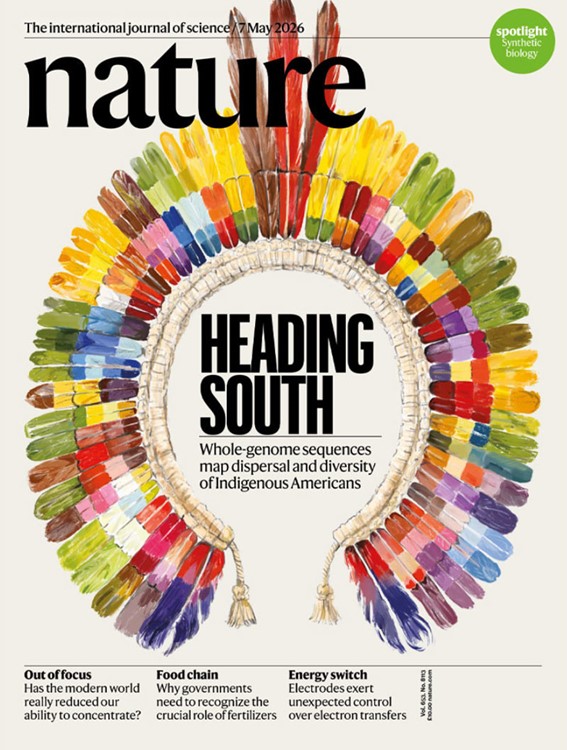
Image: reproduction
The article “The evolutionary history and unique genetic diversity of Indigenous Americans” can be read at nature.com/articles/s41586-026-10406-w.
Source: https://agencia.fapesp.br/58126


