


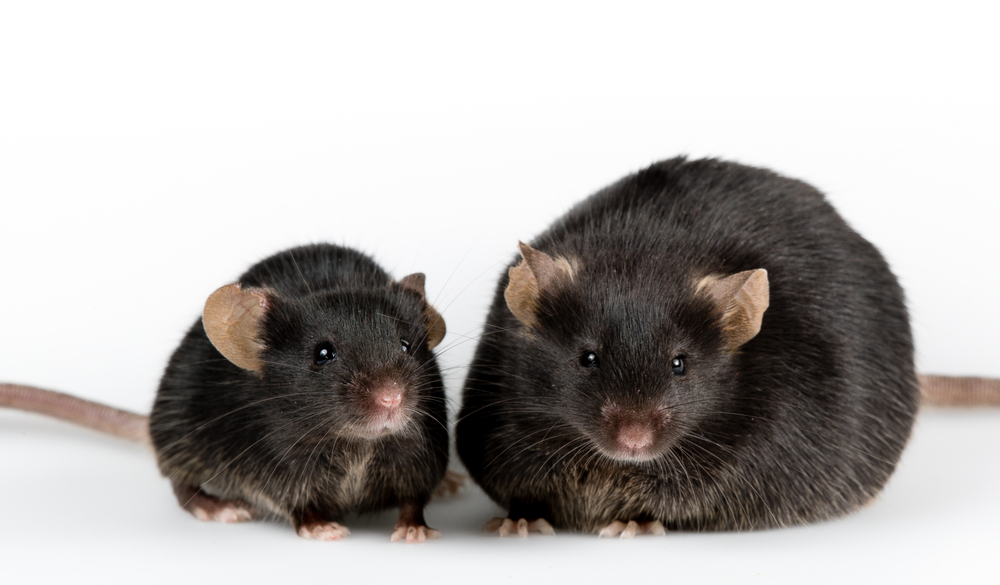
The authors note that the findings are still experimental (image: Shutterstock)
Published on 09/21/2026
By Fernanda Bassette | Agência FAPESP – Just seven days of strength training increased visceral fat burning in obese mice, even before any weight loss could be seen on a scale. In an experiment conducted at the State University of Campinas (UNICAMP), in Brazil, researchers observed that a short period of strength training activated mechanisms involved in fat breakdown, reduced fat cell size, and decreased fat around the animals’ intestines.
The study, published in the journal Life Sciences, aimed to understand how adipose tissue responds at the beginning of strength training, before weight loss could affect the results. Supported by FAPESP, the study is part of a research line that has investigated how physical exercise affects metabolic health for nearly 20 years. Since 2007, the group has studied the mechanisms involved in the effects of physical activity on conditions such as obesity and diabetes. With advances in molecular analysis techniques, the researchers began investigating not only the visible effects of exercise, such as weight loss or muscle mass gain, but also the changes that begin to occur within cells.
“We’ve always heard that physical exercise burns fat and helps you lose weight. But we rarely stop to think about how that happens, how much exercise is needed, and what that fat burning actually means,” says Leandro Moura, a physician, physical education professional, professor at UNICAMP, author of the study, and coordinator of the Exercise Cell Biology Lab (ECeBiL). This group is dedicated to studying the physiological, metabolic, and biomolecular adaptations induced by physical exercise and sports.
The training
The tests were conducted on male mice. One group was fed a standard diet, while another was fed a high-fat diet to induce obesity. The obese animals were then divided into two groups. One group remained sedentary, while the other began strength training. The high-fat diet continued throughout the exercise period so that the only difference between the groups would be physical activity. This allowed the effects of strength training to be isolated.
The mice had to climb a 70-centimeter staircase while carrying a weight attached to their tails to simulate strength training. Each session was conducted at 70% maximum capacity and included 20 climbs with rest intervals of 60 to 90 seconds. In total, there were seven sessions. “We calculated how much weight each mouse could carry while climbing a staircase. Obviously, it isn’t possible to replicate the exact strength training exercises performed by a person, but we were able to induce a similar effort in the body, with more intense contractions, effectively mimicking a strength training session for humans,” Moura explains.
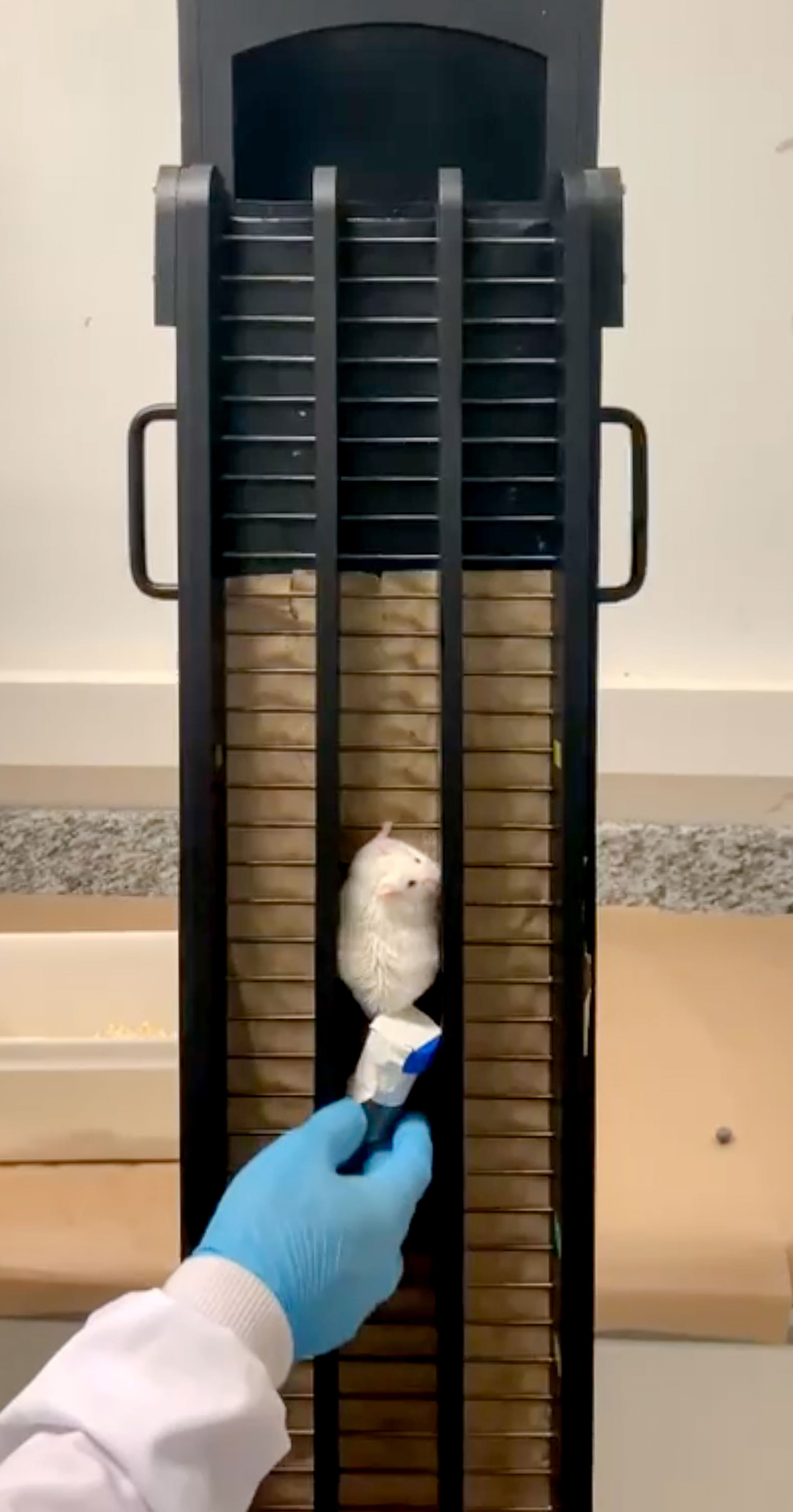
The mice had to climb a 70-centimeter staircase while carrying a weight attached to their tails to simulate strength training (photo: Leandro Moura)
The analyses focused on mesenteric adipose tissue, the layer of fat surrounding the intestines. According to Moura, this tissue is the primary representative of “visceral fat” in humans – the fat that accumulates deep within the abdomen, among the vital organs. This fatty tissue is far more harmful to health than subcutaneous fat, which is located just beneath the skin. When present in excess, visceral fat releases inflammatory substances directly into the bloodstream, altering the metabolism of the entire body.
The researcher explained that the decision to monitor the impact of strength training on the animals for only seven days was intentional. They wanted to observe the effects of strength training on adipose tissue before any weight loss occurred because weight loss itself triggers various bodily changes that could mask the direct effects of exercise.
“When we’re able to maintain the same body weight and observe what happened in the body, we can directly isolate what physical exercise contributed to before weight loss,” Moura explains. The two groups of obese animals were fed the same diet throughout the experiment to avoid introducing another variable.
Although their total body weight did not decrease during this time, the mice that did strength training had less mesenteric adipose tissue mass than the sedentary obese animals. Additionally, their adipocytes (cells responsible for storing fat) were smaller. The size of these cells is important for metabolic health. In obese individuals, adipocytes swell so much that they undergo chronic stress and begin secreting inflammatory substances into the bloodstream. The fact that exercise shrinks these cells proves that the tissue is no longer inflamed and is becoming metabolically healthy, even before there is any change on the scale.
The metabolic mechanism involved
When the researchers investigated what was happening inside these cells, they discovered that obesity had impaired the action of proteins that are important for lipolysis, or the process of breaking down stored fat so that it can be used as an energy source. After seven strength training sessions, part of this mechanism began functioning again.
The proteins analyzed included PLIN1 (perilipin-1), ABHD5, and ATGL. In simple terms, PLIN1 helps regulate the fat stored within fat cells. When stimulated by exercise, PLIN1 undergoes a change and releases ABHD5, which activates the breakdown of fat. Once released, ABHD5 binds to ATGL, an enzyme involved in the first step of breaking down triglycerides stored in the cell. The study also found a reduction in the expression of the Scd1 gene, which is involved in synthesizing fat molecules. This suggests that the body becomes less prone to storing dietary calories in adipose tissue.
In sedentary, obese mice, however, ABHD5 levels were reduced, so the fat-breaking mechanism was not significantly activated. Strength training increased the interaction between ABHD5 and ATGL, activating other markers involved in lipolysis. “People tend to think that if they’ve been strength training for two months and haven’t lost weight, it hasn’t done any good. But what we saw in this study is that after just seven days of strength training – even when there was still no weight loss – the molecular pathways that promote fat accumulation were less active, while those that stimulate fat breakdown were more active,” Moura comments.
According to the researcher, the results help dispel the notion that only aerobic exercise contributes to weight loss and that strength training only increases muscle mass. “Both types of exercise activate similar pathways – at different intensities – as well as different pathways. Therefore, combining the two remains the best recommendation and the best strategy for those who want to lose weight,” says Moura.
Next steps
It is important to note that these findings are still experimental. In other words, one should not assume that seven days of strength training will produce the same effects in humans. This study was conducted on male mice only, assessed a single fat deposit, and analyzed only genes, proteins, and molecular signals related to fat breakdown.
The team plans to monitor longer training periods to understand how these responses evolve as weight loss begins to occur. The researchers are also investigating the effects of exercise on other fat deposits, including those around the heart.
Moura says the study sends a message to those who are just starting to exercise and expect immediate results on the scale. “Even if we aren’t seeing anything yet with the naked eye, metabolically, inside our bodies, various signals that are beneficial to health – including weight loss – are taking place. That’s why we shouldn’t get discouraged by the lack of visible results after a short period of strength training,” the researcher concludes.
The article “Strength training induces ABHD5-ATGL axis to counteract mesenteric fat accumulation in obese Swiss mice” can be read at www.sciencedirect.com/science/article/abs/pii/S0024320526003553.
Source: https://agencia.fapesp.br/59234


