


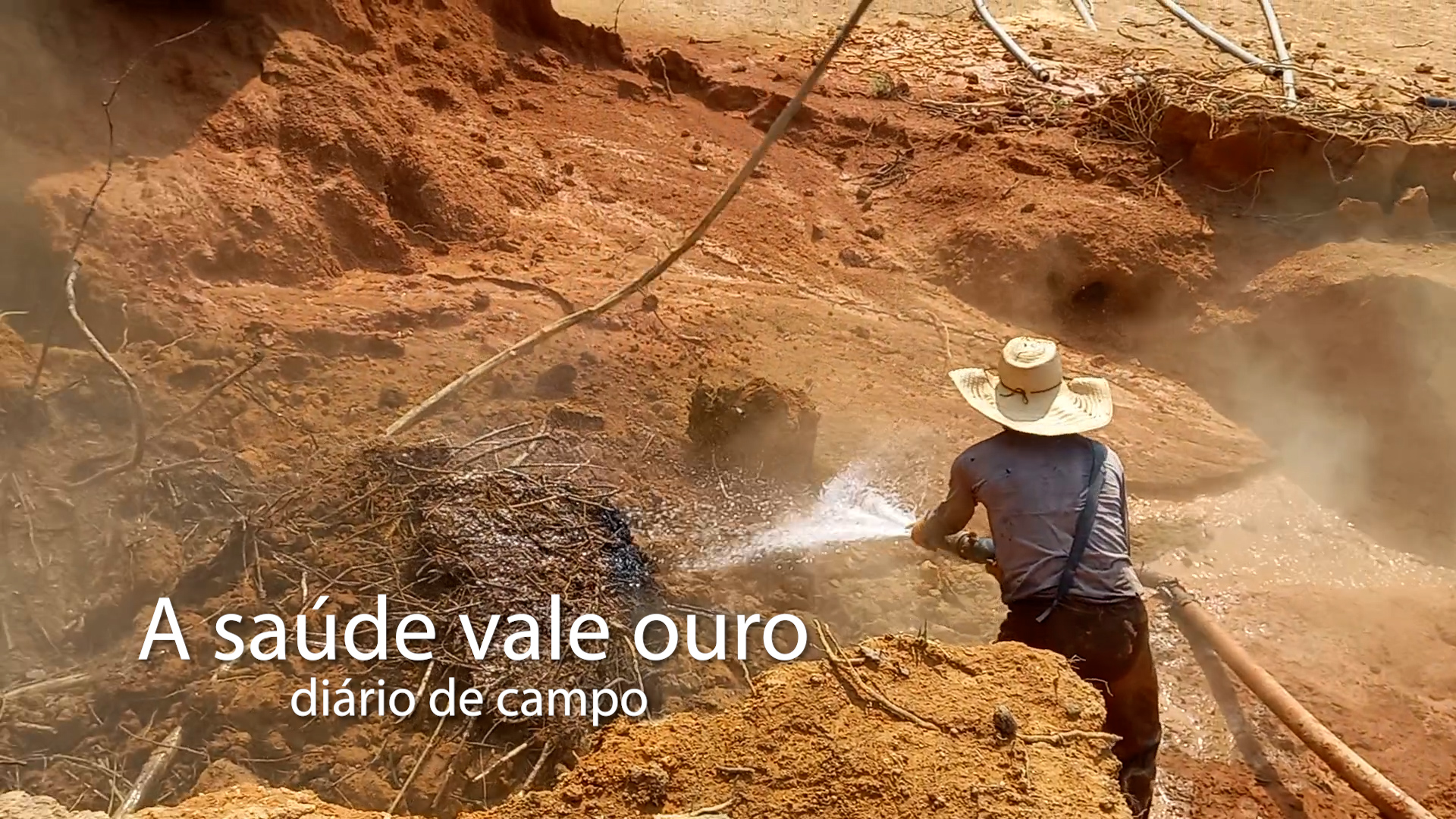
The report features records made by researchers during fieldwork (image: reproduction)
Published on 01/12/2026
By André Julião | Agência FAPESP – While the prevalence of human immunodeficiency virus (HIV) in the general population is less than 1%, it exceeds 5% in groups such as sex workers and men who have sex with men (MSM), according to data from the Brazilian Ministry of Health.
However, the prevalence of HIV infection, which can lead to AIDS, is unknown in so-called bridge populations – those who have contact with these more vulnerable groups and can spread sexually transmitted infections (STIs) to the general population.
In Brazil, this is the case with gold miners, who are normally isolated from health services and may have more contact with sex workers than the general population. In the so-called corrutelas, where businesses gather to supply the baixões – the sites of actual gold mining – there is an abundance of cabarets and other places where people socialize and engage in sex work. For this reason, the prevalence of STIs may be higher in this group.
Researchers from the University of São Paulo’s Medical School (FM-USP), the Adolfo Lutz Institute, and the Santa Casa de São Paulo's School of Medical Sciences (FCM) are conducting a FAPESP-supported project in the southwest of Pará state. The project aims to investigate the prevalence of STIs and their main determinants among men and women living in gold mining areas.
Testing for HIV, hepatitis B and C, syphilis, and malaria, as well as interviews and anthropometric assessments, took place in Itaituba, the municipality with the largest gold mining area in the country at 44,890 hectares.
“We’ve been present in the Santarém region since 2000, which has allowed us to follow the great social and economic transformation that’s been taking place there through the proliferation of gold mining. These changes have taken on impressive proportions in recent years, which has had a clear impact on public health,” says Aluisio Segurado, a professor at the Department of Infectious Diseases and Tropical Medicine at FM-USP.
Segurado coordinates the project “Health is worth its weight in gold: Prevalence and vulnerabilities to HIV and sexually transmitted infections and masculinity profiles among miners in the Tapajós River Basin”, which is supported by FAPESP.
“This is a population that’s normally difficult to access, both because of the isolation of the mines and their resistance to contact, since the activity is also surrounded by illegality, making the miners, according to the literature, a hidden population,” says Paulo Abati, an infectious disease physician who is pursuing a doctorate at FM-USP under Segurado’s guidance.
“To facilitate our access, we rely on the fact that health teams are commonly very well received, in a tradition that dates back to the work of agents from the now defunct SUCAM [Superintendence of Public Health Campaigns, which existed until 1991], recognized as ‘the malaria guards,’” he adds.
Abati had already worked in the region as an extension physician for USP’s Center for Tropical Medicine (NUMETROP) in Santarém. This experience led him to pursue a master’s degree, which involved analyzing the sociodemographic, clinical, and laboratory profiles of people with HIV/AIDS in the region.
Ethnography
Before conducting the five-week testing in 2024, Abati visited the municipalities targeted by the study in 2023 alongside other team members: Marcia Couto, a professor at the Department of Preventive Medicine at FM-USP, Maria Amélia Veras, from the School of Medical Sciences at Santa Casa de São Paulo, the anthropologist Vilmar Gomes, and Cezar Pingarrilho, from the Itaituba Health Department team. “The latter was instrumental in enabling access to these areas,” says Abati.
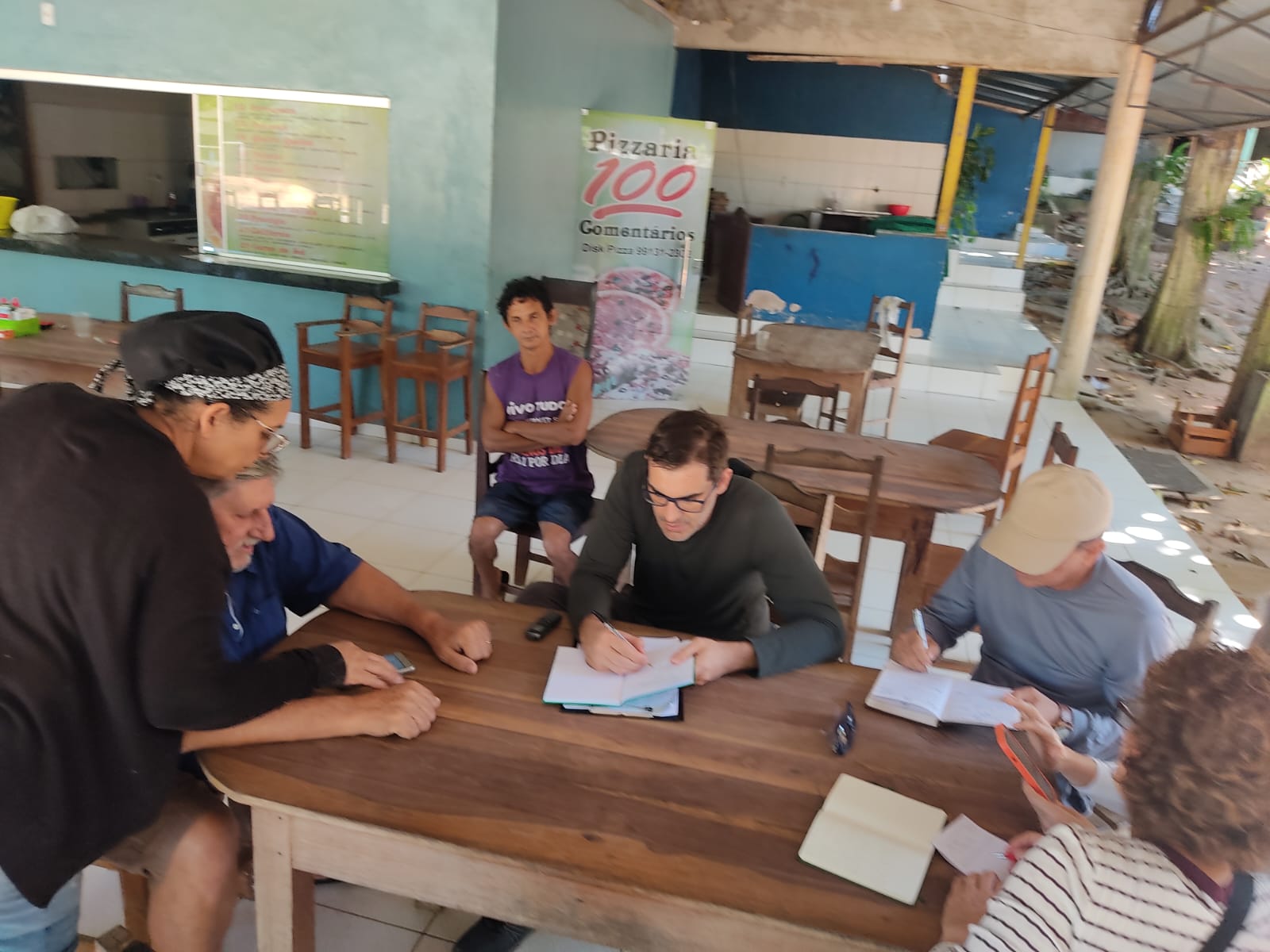
Infectious disease specialist Paulo Abati during an interview in Crepurizão, Itaituba municipality (photo: Marcia Couto)
This part of the research is called the formative phase. Ethnography is carried out through interviews and participant observation in this phase, which allowed the researchers to more clearly define who would participate in the study and establish bonds of trust with the residents.
“At this initial stage, we conducted a qualitative study, with observation of the sites, systematic records, and semi-structured interviews, which allowed for a more open approach to interactions with residents and also provided a better understanding of the local dynamics and guided the quantitative research,” explains Abati.
Thanks to this, it was possible to include women other than sex workers as research participants. The participation of the group’s female researchers in the formative phase was also essential to incorporating a gender perspective in this context.
“We identified a fluidity in the women’s work. In the corrutela, a woman may enter sex work on an ad hoc basis, depending on certain conditions of greater vulnerability. Some interviewees had sex in exchange for money even though they didn’t identify as sex workers. It doesn’t seem to be something stigmatizing in that context,” says the doctoral student.
Another important aspect of this phase of the study was including malaria in the diseases tested. “Our initial focus was on sexually transmitted infections, but we realized that malaria is an important disease that can’t be disregarded. The miners live in unsanitary conditions, which favor the presence of the mosquito that transmits the parasite and can worsen STI cases,” says Segurado.
The researchers have not yet consolidated the data, but preliminary analyses suggest a higher prevalence of HIV and other STIs in this population than in the general population.
HIV carriers were referred for treatment through the SUS (an acronym for Sistema Único de Saúde, Brazil’s national public health network) in nearby municipalities. The team included professionals from the Itaituba municipal health department, such as Adelza Pereira, an endemic disease agent who collaborated with testing and referral for syphilis medication in some cases.
Since the antibody test cannot determine if the disease is present or has been cured, treatment was recommended as a precaution for women of childbearing age to prevent congenital syphilis, which is transmitted from mother to fetus. Treatment was also offered in other situations.
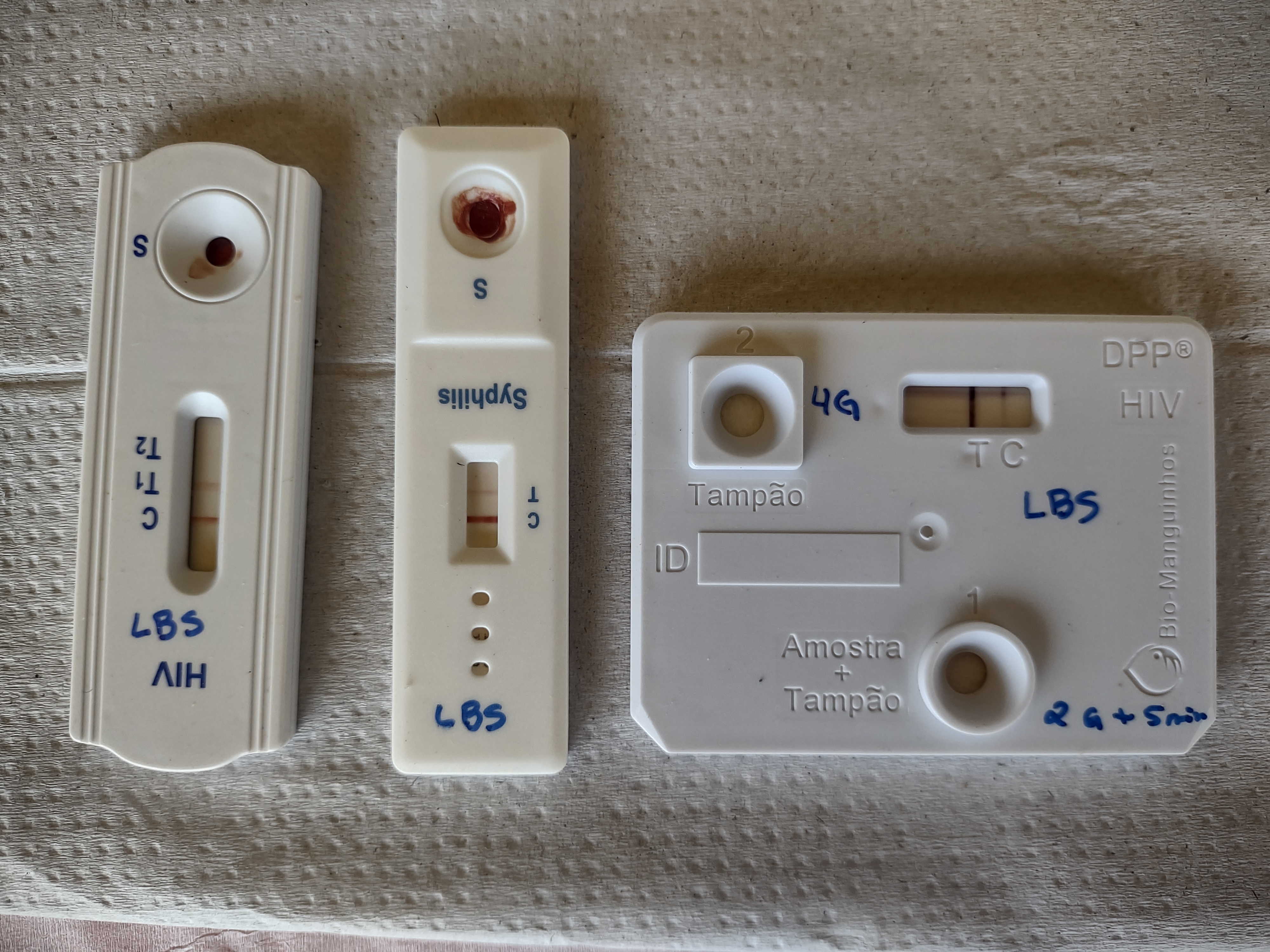
Positive HIV test recorded during a study in Crepurizão, Itaituba municipality, southwestern Pará (photo: Paulo Abati)
Information on mental health, alcohol use, other psychoactive substance use, and risk factors for metabolic diseases was also included.
“The study shows the importance of local health professionals, in whom the population places great trust. The community health workers, endemic disease agents, and other professionals know people by name and are called upon for any health issue. If it weren’t for them, we wouldn’t have been able to access these populations,” concludes Segurado.
The study also received support from FAPESP in the form of a Technical Training Scholarship awarded to Rafaela Maciel Del Nero.
Silvia Di Santi and Mariana Aschar, who are affiliated with the Malaria Laboratory at the Adolfo Lutz Institute, conducted the malaria-related research. Aschar also participated in the field survey phase in 2024.
Source: https://agencia.fapesp.br/56936


