


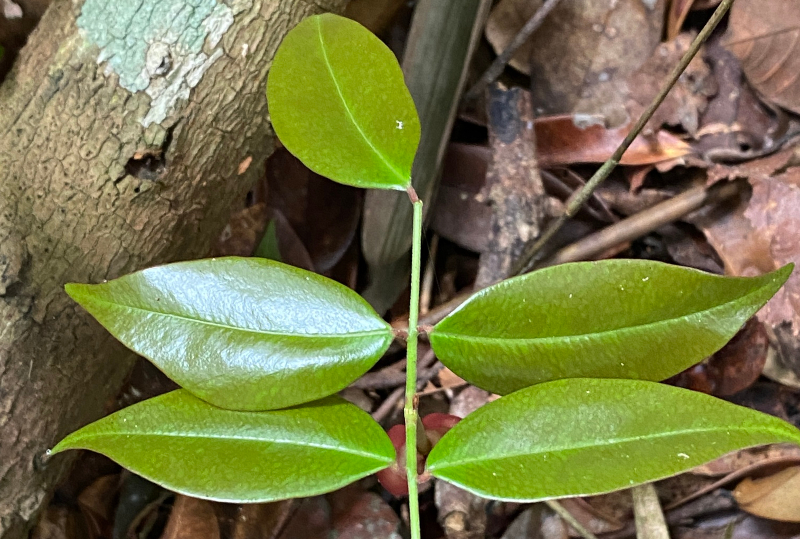
Copaifera lucens is primarily found in Atlantic Forest areas (credit: Geovane Siqueira/iNaturalist)
Published on 04/27/2026
By Thais Szegö | Agência FAPESP – A study has revealed that galloylquinic acids extracted from the leaves of Copaifera lucens Dwyer, a tree endemic to Brazil primarily found in the Atlantic Forest, have a multi-targeted effect against SARS-CoV-2, the virus that causes COVID-19.
The species was chosen because the research group led by Jairo Kenupp Bastos, a pharmacist and professor at the Ribeirão Preto School of Pharmaceutical Sciences at the University of São Paulo (FCFRP-USP) who coordinated the study, has extensive experience in the phytochemistry and pharmacology of Copaifera species.
Previous studies have reported the various biological and pharmacological benefits of galloylquinic acids extracted from plant leaves. These benefits include antifungal and anticancer activities in vitro and in vivo, as well as broad-spectrum antiviral properties.
Derivatives of the substance have shown significant inhibition against HIV-1 in biochemical assays and cell cultures with lower toxicity than other tested molecules.
To begin the study, which was supported by FAPESP, the scientists prepared and characterized fractions rich in galloylquinic acids derived from the leaves of the species. Next, they conducted cytotoxicity assays to determine the safety of introducing these compounds into host cells.
They assessed antiviral activity using plaque reduction assays, a method that quantifies the ability of antibodies or antiviral compounds to neutralize viruses. This method revealed strong activity against SARS-CoV-2. The expression of viral proteins and interactions with key viral targets were also studied. These targets included the receptor-binding domain of the spike protein, which allows the virus to enter human cells, as well as papain-like protease (PLpro), an important enzyme for viral evasion, and RNA polymerase, an essential enzyme for viral replication.
“This integrated approach allowed us to understand how the compounds work and how they act at the molecular level,” said Mohamed Abdelsalam, an assistant professor of pharmacognosy and natural product chemistry at the Faculty of Pharmacy at the Delta University of Science and Technology in Egypt. He is also affiliated with the School of Health Sciences at the Pompeu Fabra University TecnoCampus in Barcelona, Spain. Abdelsalam led the biological study jointly with Professor Lamiaa A. Al-Madboly, Head of the Department of Microbiology at the Faculty of Pharmacy at Tanta University in Egypt, and Associate Professor Rasha M. El-Morsi from the Department of Microbiology at the Faculty of Pharmacy at the Delta University of Science and Technology in Egypt. The study was conducted in collaboration with Egyptian researchers from Alexandria University.
The results, published in the journal Scientific Reports, revealed that galloylquinic acids exhibit strong activity against the coronavirus variant by inhibiting viral entry into cells, viral replication, and viral protein expression. Additionally, the anti-inflammatory and immunomodulatory activities of the substance may modulate the immune response of the infected individual, which could be particularly relevant in severe cases of the disease.
“An important aspect revealed by this information is the multi-target mechanism of the compound, which reduces the likelihood of resistance developing. This is because many current antivirals act on only one viral protein, which promotes this effect,” says Bastos.
A few more steps remain before the substance can be developed into a drug against COVID-19, including in vivo and clinical trials. However, the study underscores the importance of biodiversity and researching natural products as sources of innovative therapeutic candidates. It also reinforces the idea that Brazilian flora is a rich and strategic source for discovering new drugs.
The article “Bioactive galloylquinic acids from Copaifera lucens as dual inhibitors of SARS-CoV-2 Spike and RdRp proteins” can be read at www.nature.com/articles/s41598-025-25217-8.
Source: https://agencia.fapesp.br/57908


