


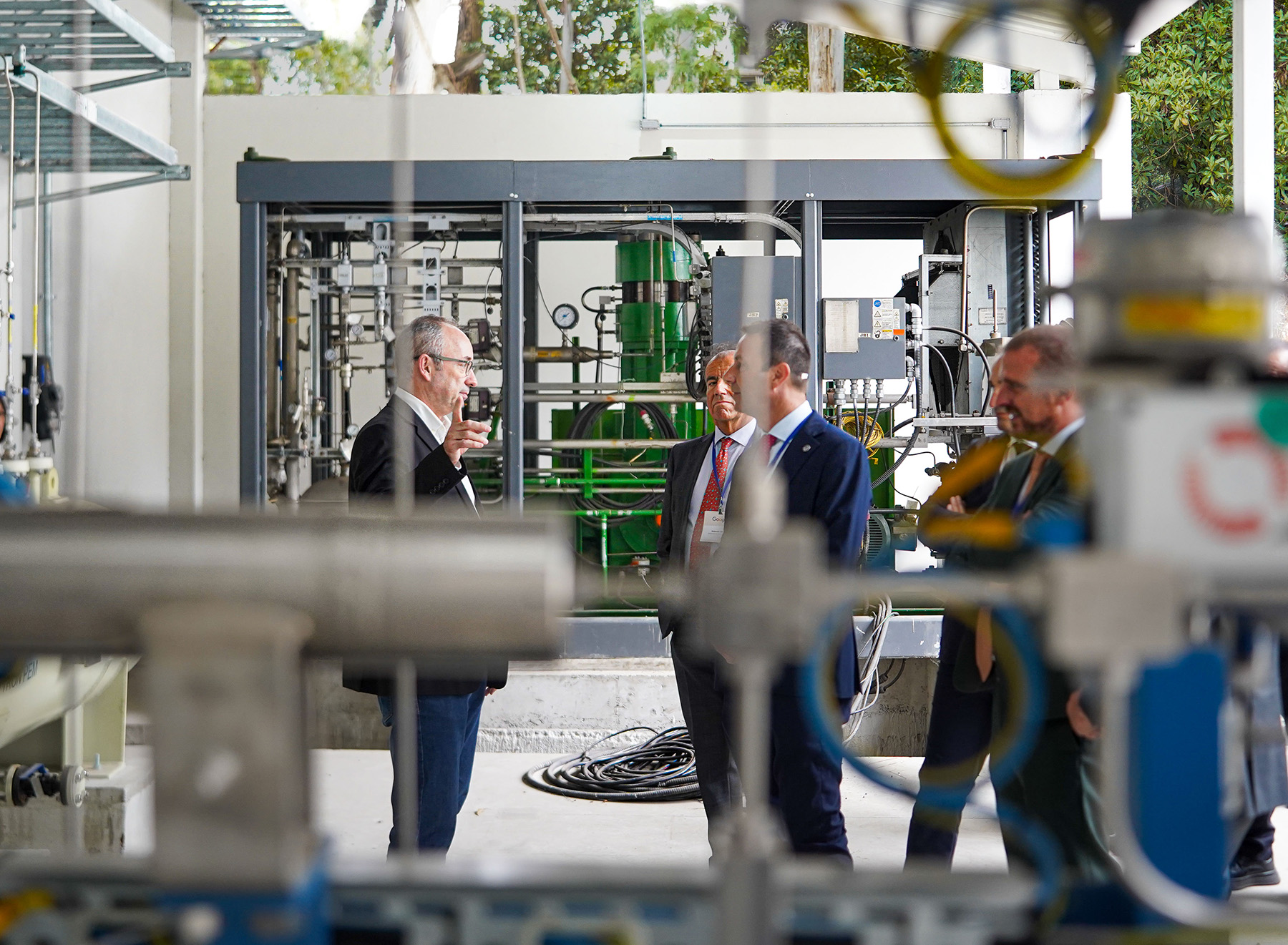
João Carlos Savio Cordeiro, technical superintendent of the IPT Energy Unit, guides Stefano Corgnati, rector of the Polytechnic University of Turin, and Roberto Zanino, from the same institution, on technical tours of facilities on the campus of the institute (photo: Daniel Antônio/Agência FAPESP)
Published on 09/14/2026
By Maria Fernanda Ziegler | Agência FAPESP – The state of São Paulo and the Italian region of Piedmont took two significant steps to expand research collaboration between Brazil and Italy. On August 31, FAPESP and the Polytechnic University of Turin (PoliTO) signed a letter of intent to establish the PoliTO Hub, an International Research Center (IRC), at the Institute for Technological Research (IPT). Two days later, on September 2, FAPESP signed a second letter of intent with Compagnia di San Paolo, an Italian foundation, to fund joint projects between the three state universities in São Paulo – the University of São Paulo (USP), São Paulo State University (UNESP), and the State University of Campinas (UNICAMP) – and research institutions in Piedmont.
“The idea behind the new International Research Center is to bring together two historic institutions, PoliTO and the IPT, to drive joint technological development and generate practical results and positive impacts for industry, innovation companies, and society,” said Marco Antonio Zago, president of FAPESP, during the ceremony at the IPT.
The new center will develop science, technology, and innovation projects that bring together universities, industry, and companies in the fields of energy transition, artificial intelligence, smart cities, transportation, architecture, and urban planning.
The PoliTO Hub will be part of FAPESP’s International Research Centers (IRC) program, which aims to foster the creation of centers of scientific excellence in São Paulo in partnership with world-renowned research institutions and universities. Two centers are already in operation: the Institut Pasteur São Paulo International Center (IPSP), a partnership between the Institut Pasteur (France) and the University of São Paulo (USP), and the “Worlds in Transitions” International Research Center (IRC Transitions), which involves the French National Center for Scientific Research (CNRS) and USP.
According to Zago, the Foundation is discussing the possibility of creating similar initiatives with the Max Planck Institute in Germany, Tsinghua University in China, and the National Institute for Research in Computer Science and Automation in France.
Raul Machado, FAPESP’s institutional relations manager, emphasized that the PoliTO Hub will enable scientists from São Paulo and Italy to collaborate. “It’s a joining of forces that should enrich the innovation ecosystem and expand research capacity with FAPESP’s support,” he said.
Stefano Corgnati, the rector of the Polytechnic University of Turin, emphasized that the collaboration strengthens both research institutions and can create a complementary ecosystem. “If we work together, we’ll be stronger,” he stated.
Anderson Correia, the CEO of the IPT, noted that the agreement will strengthen the institute’s internationalization and enrich its innovation environment. “While we’ll be working side by side with the Italians here, we’ll also be establishing the IPT’s presence in Europe,” he said. Through its open innovation program, IPT Open, the institute has partnered with significant global companies such as Google, Intel, Vale, Tupi, and WEG.
The mayor of Turin, Stefano Lo Russo, who is also a scientist and professor at the Polytechnic University of Turin, stated that cities are a fundamental test of the competitiveness of research projects. “The modern concept of international cooperation consists of bringing together cities, universities, and public institutions. Such integration can provide a fundamental perspective for innovation in the political mission of the institutions that serve our communities,” he argued.
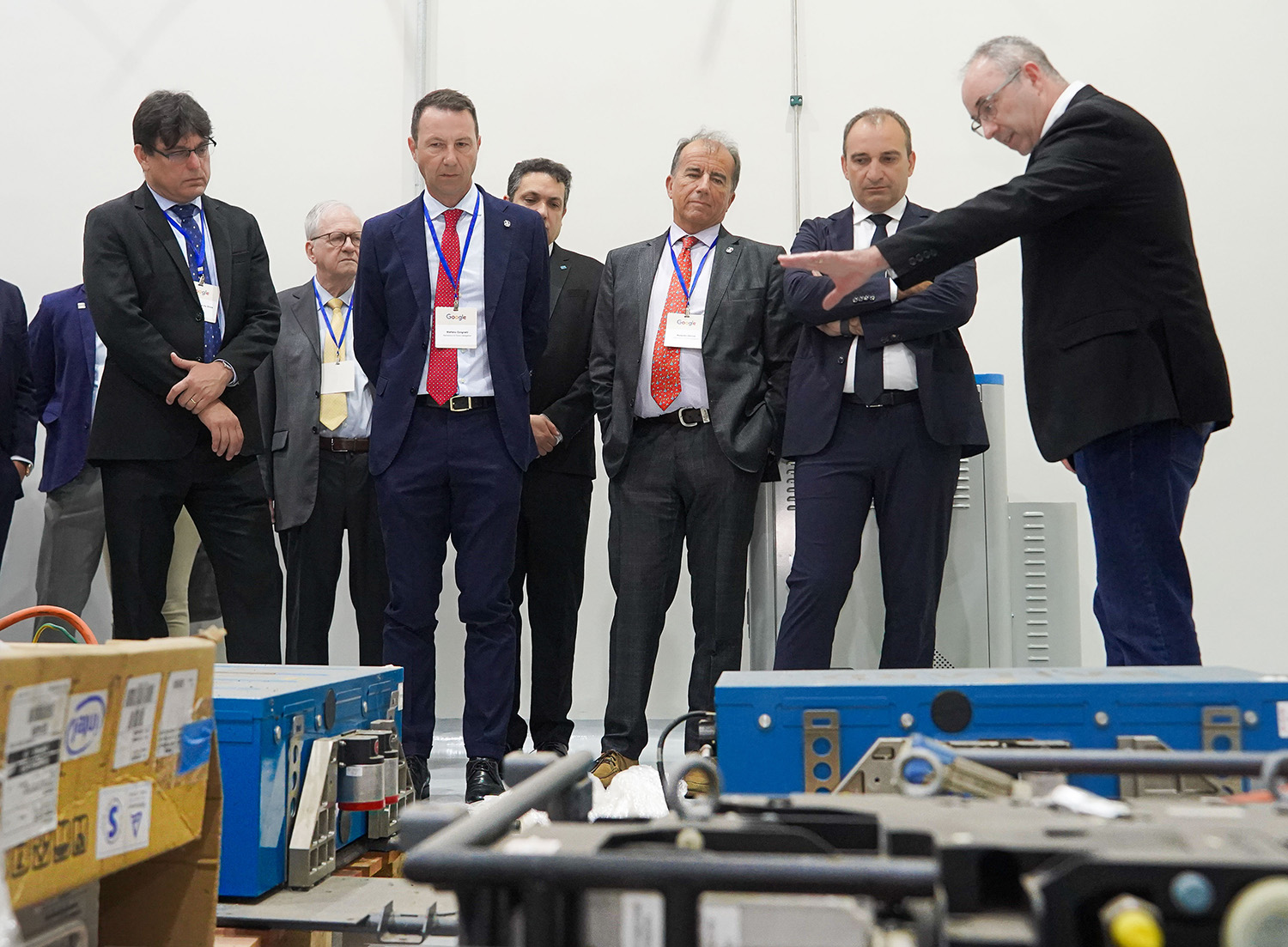
The Italian delegation toured the hydrogen laboratory at the IPT Energy Unit (photo: Daniel Antônio/Agência FAPESP)
A hotbed of talent
On September 2, after announcing the new International Research Center, FAPESP and the Italian philanthropic foundation Fondazione Compagnia di San Paolo signed a letter of intent to fund joint research between three state universities in São Paulo, the Polytechnic University of Turin, and the universities of Turin and Eastern Piedmont.
“More than sharing the same patron saint, we have a mission to contribute to the development of our countries. We also recognize the geopolitical value of strengthening academic and scientific relations between Italy and Latin America,” said Marco Gilli, president of the Fondazione Compagnia di San Paolo, via video call. He also stated that the institution has committed to an initial investment of €200,000 over two years.
For Gilli, the project is strategic. “It connects two of the strongest university clusters in the world. The one in the São Paulo region is probably one of the best in South America and among the best in the world,” he said.
Maysa Furlan, the rector of UNESP and chair of the Council of Rectors of São Paulo State Universities (CRUESP), noted that the agreements mark a new scientific and academic chapter, bringing research groups from the two regions closer together and creating new opportunities for interaction.
Corgnati, who is rector of the Polytechnic University of Turin and coordinator of the association of the three state universities of Piedmont, stated that the partnership and structure of the new research center can create a “hotbed of talent” – scientific leaders who can positively influence their regions and the world.
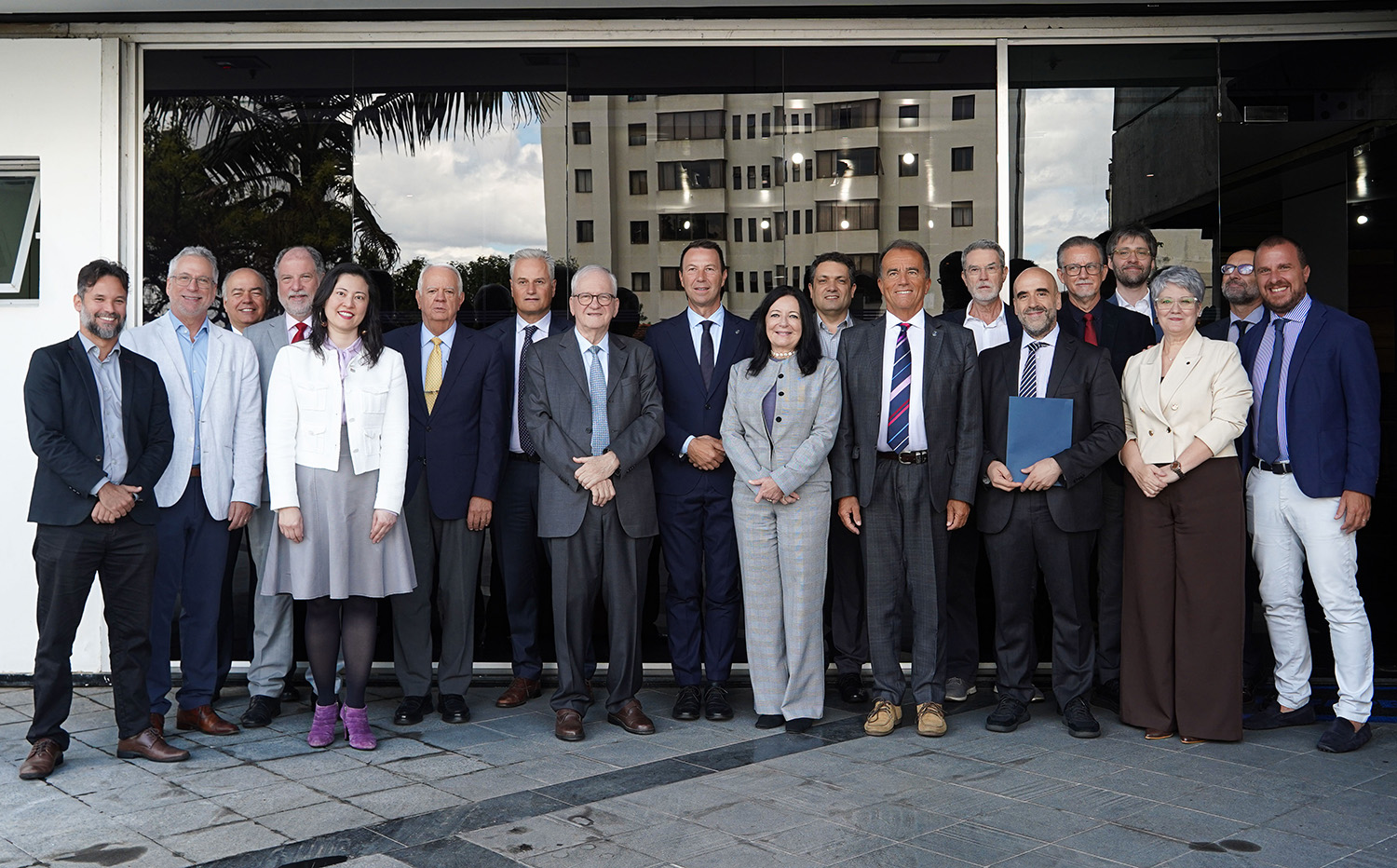
FAPESP and the Fondazione Compagnia di San Paolo signed a letter of intent to fund joint research between São Paulo state universities and Italian institutions (photo: Daniel Antônio/Agência FAPESP)
Fast and slow
The creation of the PoliTO Hub at the IPT and the agreement to fund joint research both originated from discussions driven by the Magalhães Network, an international consortium of European, Latin American, and Caribbean universities focused on science, technology, engineering, and architecture.
“It all began at the celebration of the Magalhães Network’s 20th anniversary in 2025. That’s where we saw the opportunity to connect Turin and São Paulo. The conversation flowed very easily from the start, despite the number of video conferences we had to design those two projects. But finally, we saw the place where we’ll work together in the coming years,” Zago recalled.
Roberto Zanino, president of Rede Magalhães, emphasized that this partnership is also a milestone for the consortium, which originally focused on educational topics and is now taking the lead in scientific research investments.
Zanino also noted that the network intends to “export” this model of interregional collaboration and offer opportunities for other partners to establish similar agreements. “This is particularly relevant in the current geopolitical context,” he concluded.
 See more images related to this and other FAPESP-related stories on the following Flickr profiles: GCOM FAPESP and FAPESP Memory Center.
Source: https://agencia.fapesp.br/59197


